SQL Server to Microsoft Fabric Data Warehouse Migration
Modernizing an enterprise SQL Server data warehouse with Microsoft Fabric while maintaining data quality, performance, security, and reporting continuity.
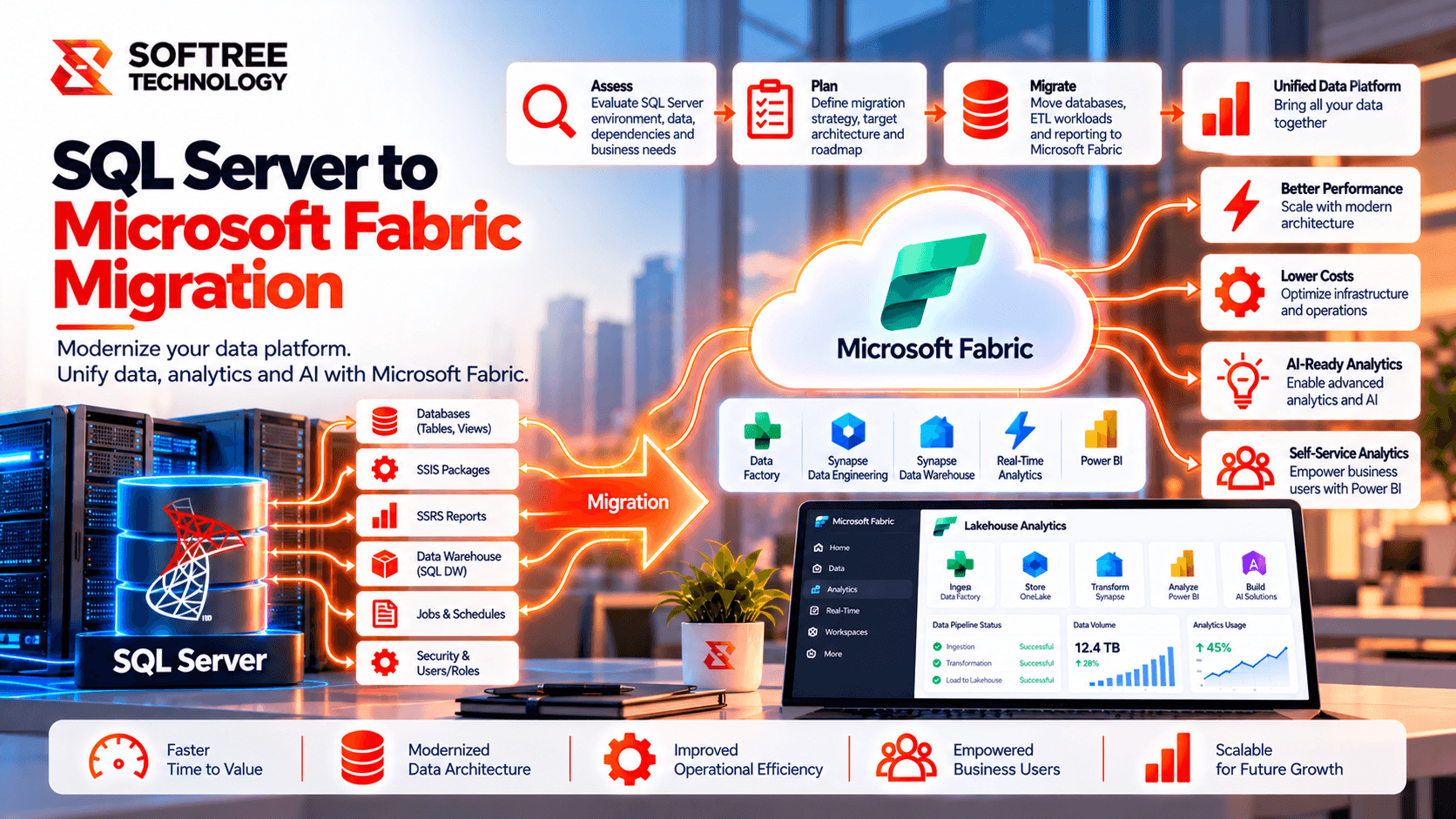
Business Process Challenges
The enterprise organization relied on Microsoft SQL Server for operational reporting, data integration, and enterprise analytics. Over time, the environment had accumulated relational tables, views, stored procedures, user-defined functions, scheduled jobs, security rules, and downstream reporting dependencies, making a direct migration to Microsoft Fabric more complex than simply moving data. SQL Server to Microsoft Fabric …
The migration needed to preserve trusted data and predictable query behavior while addressing differences between SQL Server and Fabric Warehouse.
- SQL Server estate complexity: The environment required a detailed inventory of schemas, tables, views, data types, constraints, indexes, stored procedures, functions, jobs, and dependencies before migration.
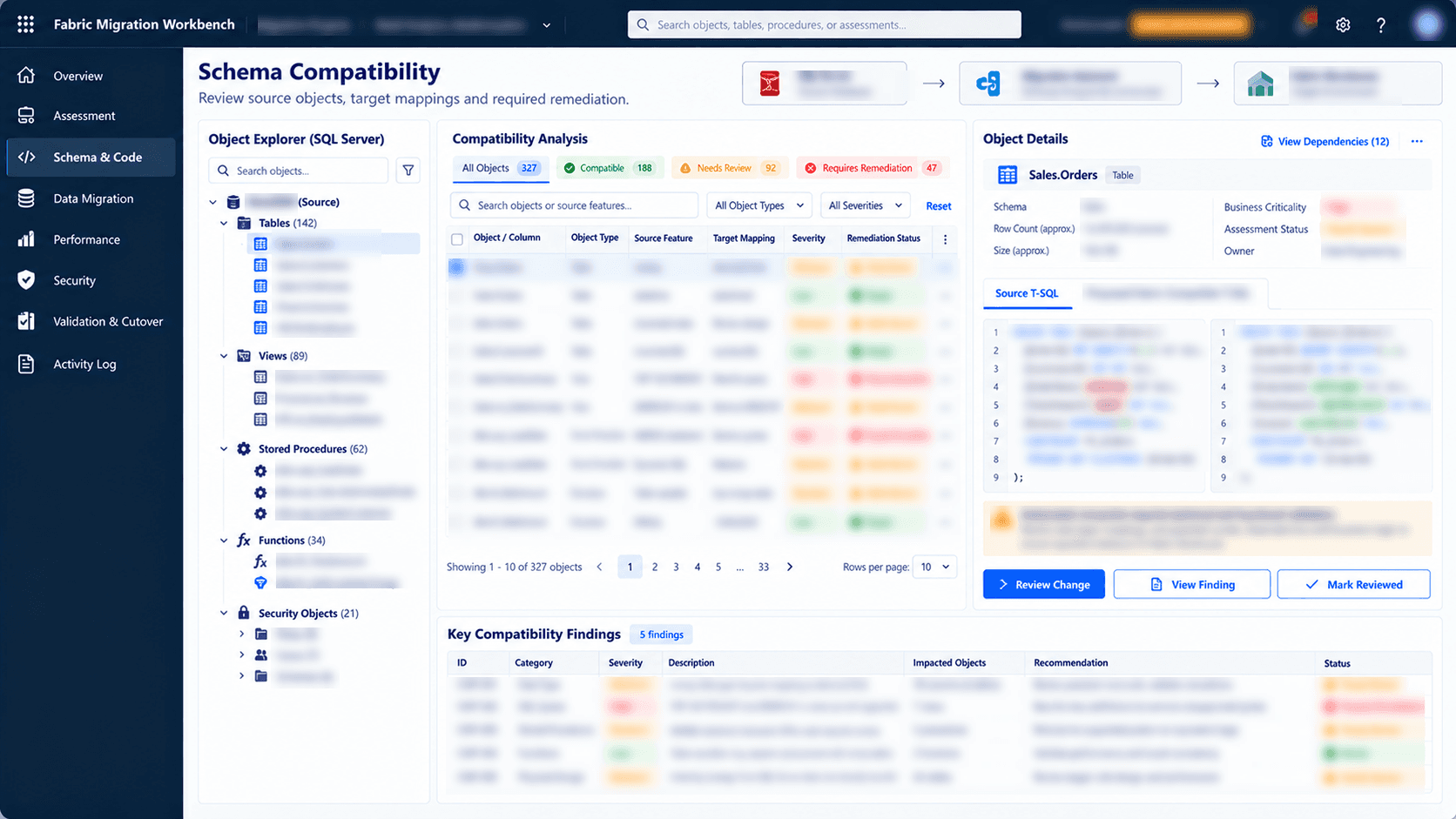
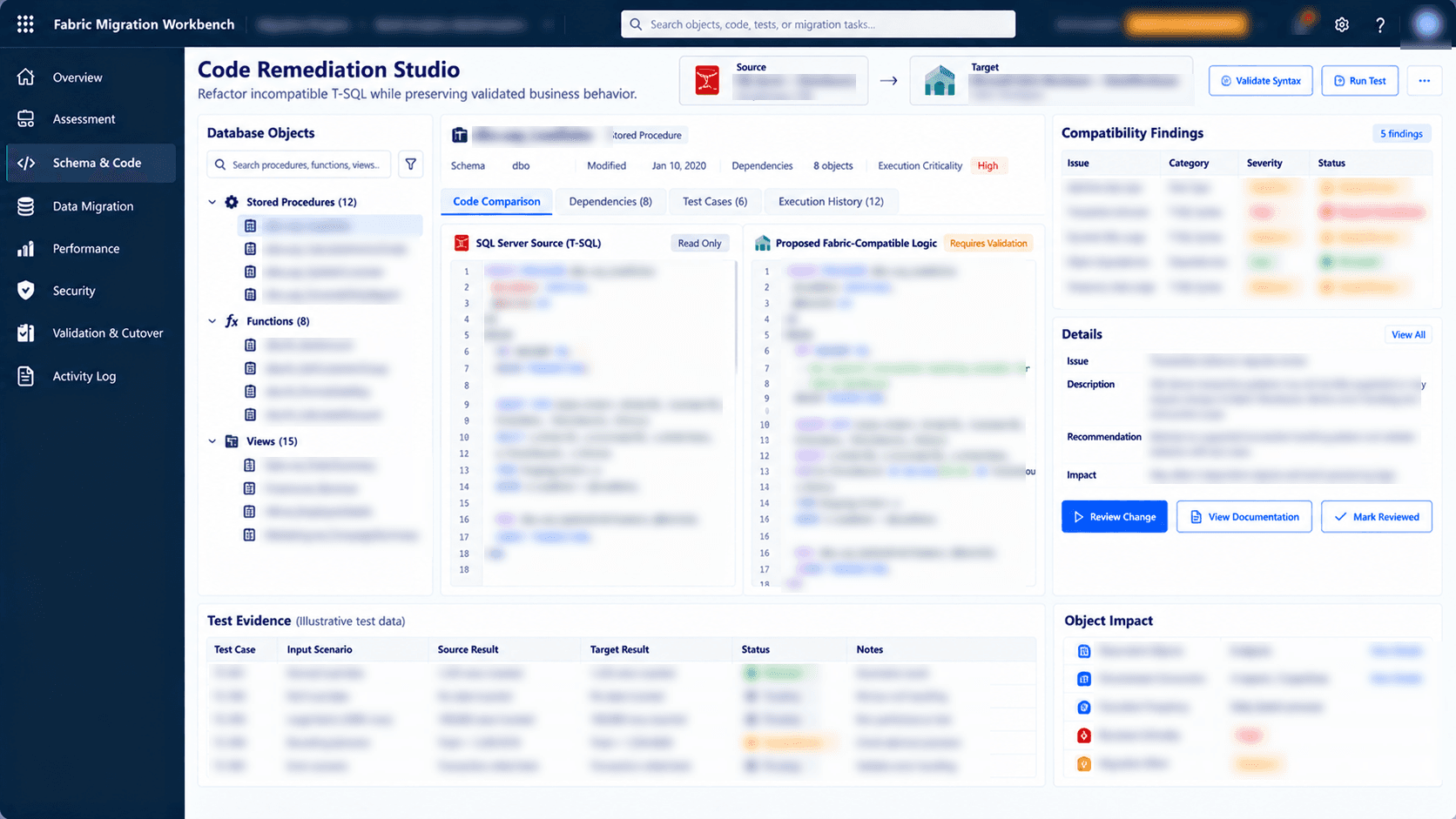
- Schema and T-SQL compatibility: Existing SQL scripts and database objects required compatibility assessment because unsupported or behaviorally different constructs could require remediation before deployment.
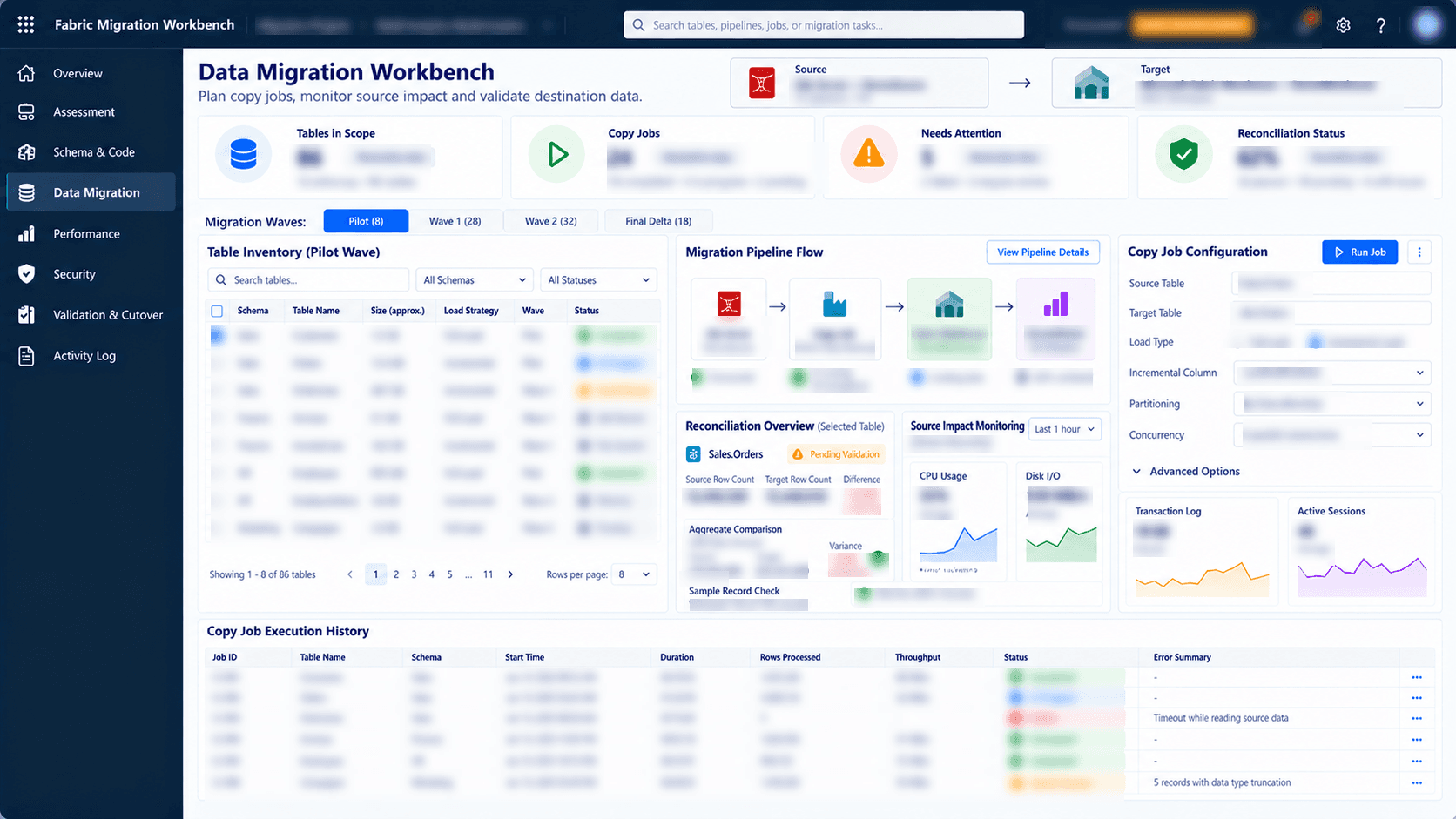
- Data migration planning: Data movement needed to account for table size, load patterns, incremental changes, source-system impact, and reconciliation requirements.
- Procedural logic: Stored procedures and user-defined functions could require redesign or refactoring because SQL Server and Fabric Warehouse do not support every feature or execution pattern identically.
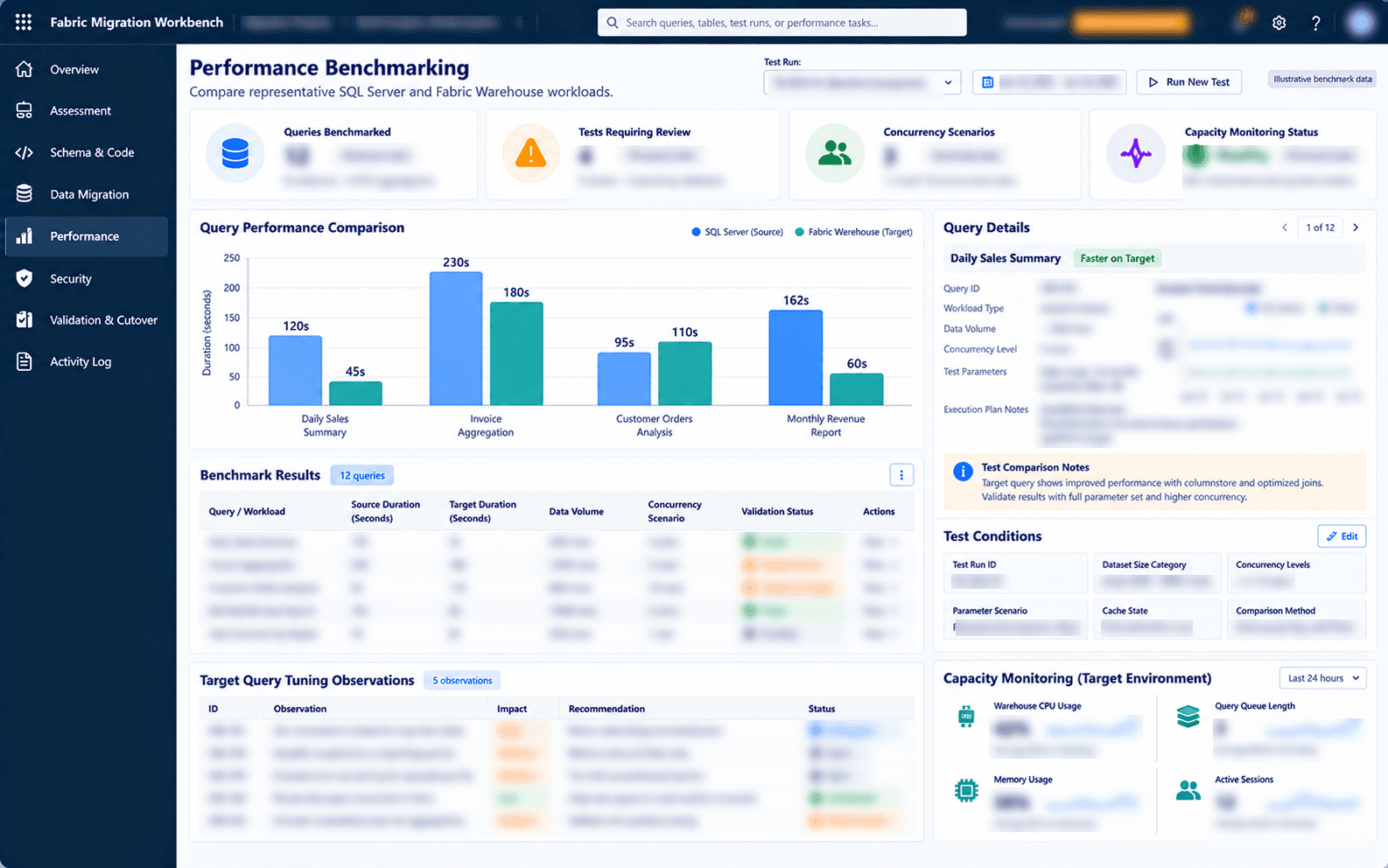
- Performance considerations: Existing SQL Server indexing and tuning approaches could not simply be transferred to Fabric, requiring representative workload benchmarking and target-side optimization.
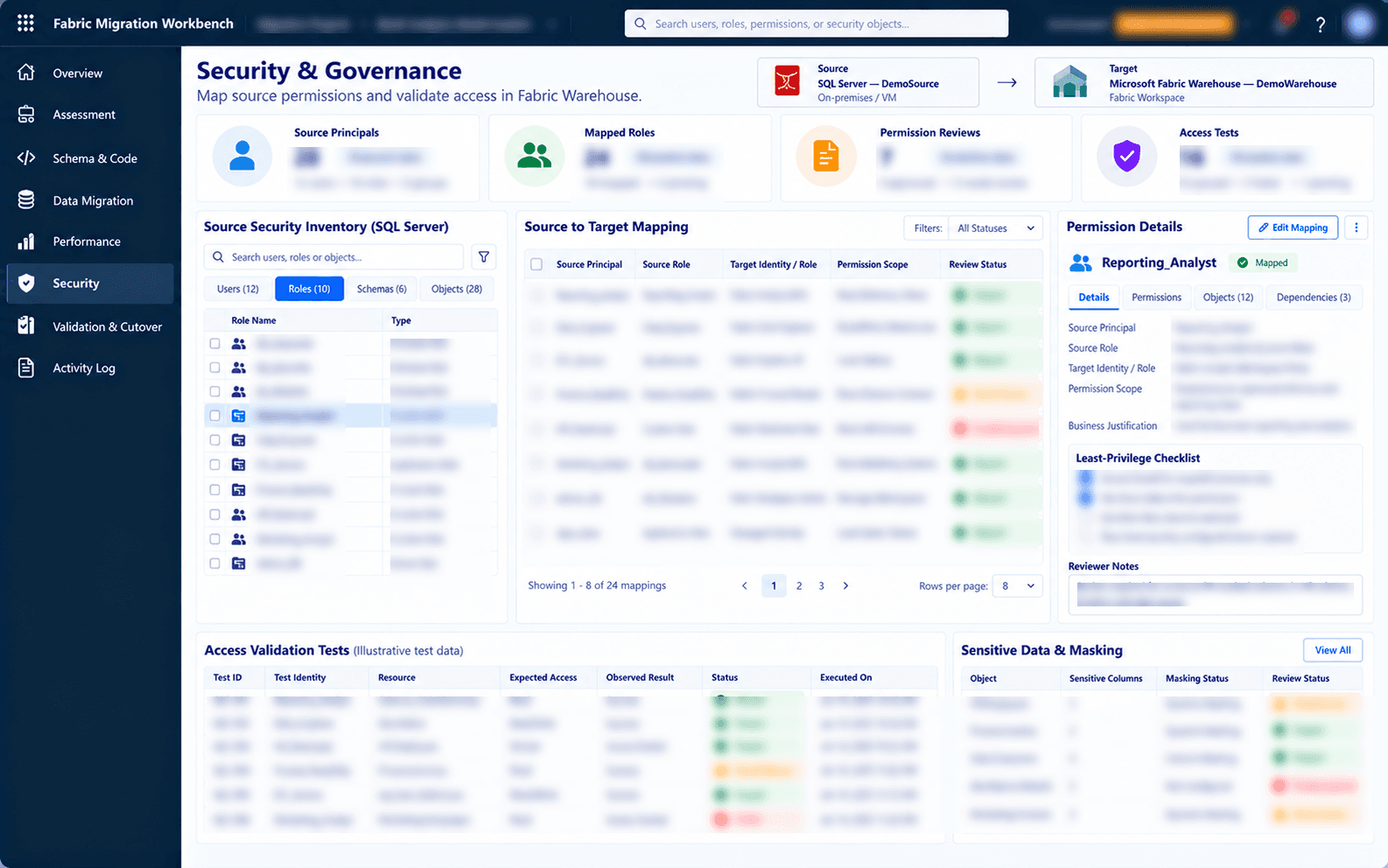
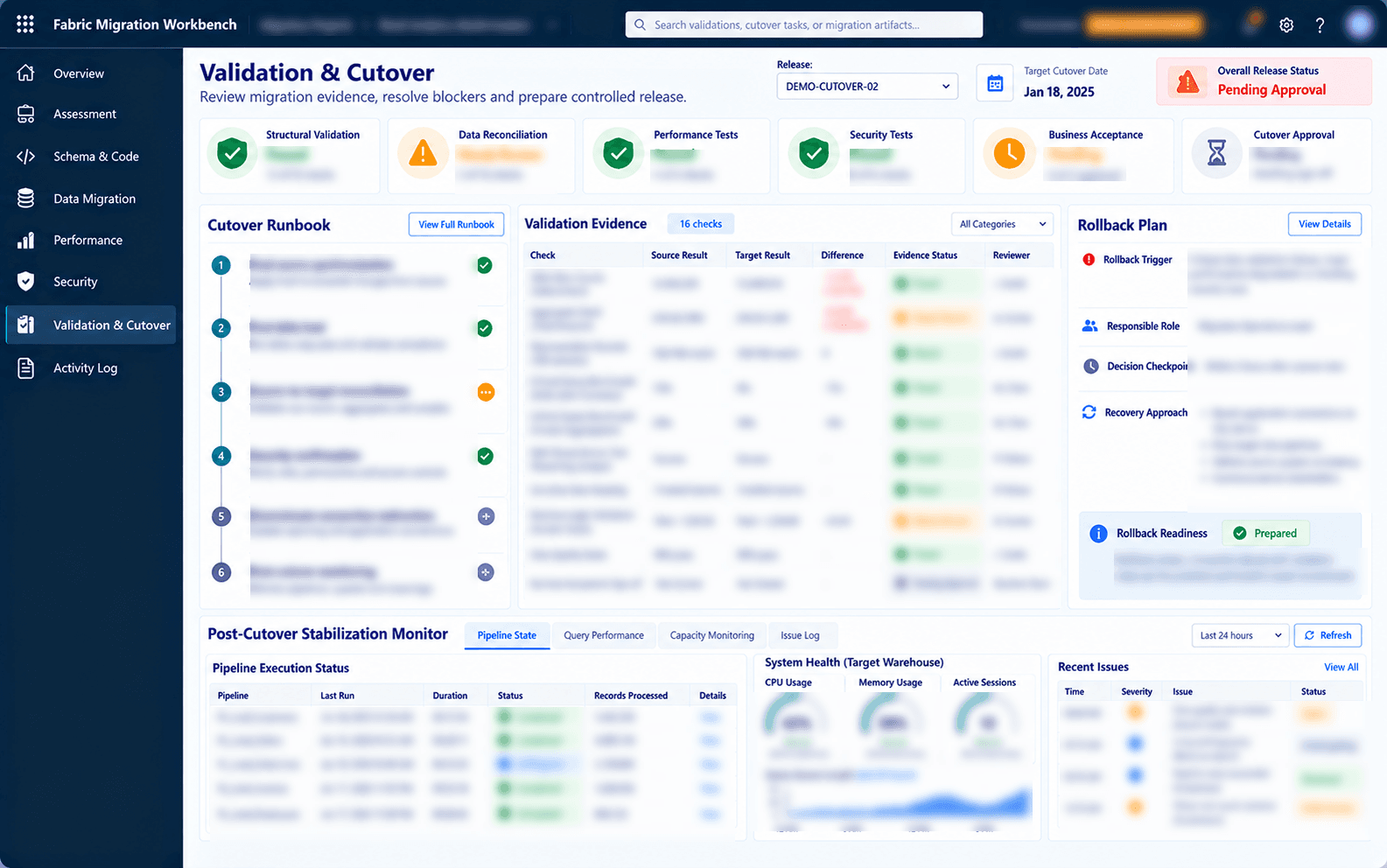
- Security and cutover risk: Existing roles, permissions, identities, sensitive-data controls, acceptance criteria, rollback procedures, and post-migration monitoring needed to be addressed before production consumers were redirected.
Our Strategic Approach
Softree's approach focused on a structured, evidence-led migration from SQL Server to Microsoft Fabric Warehouse rather than treating the project as a simple database copy. The proposed architecture introduced controlled assessment, schema migration, data movement, code remediation, performance validation, security mapping, and phased cutover.
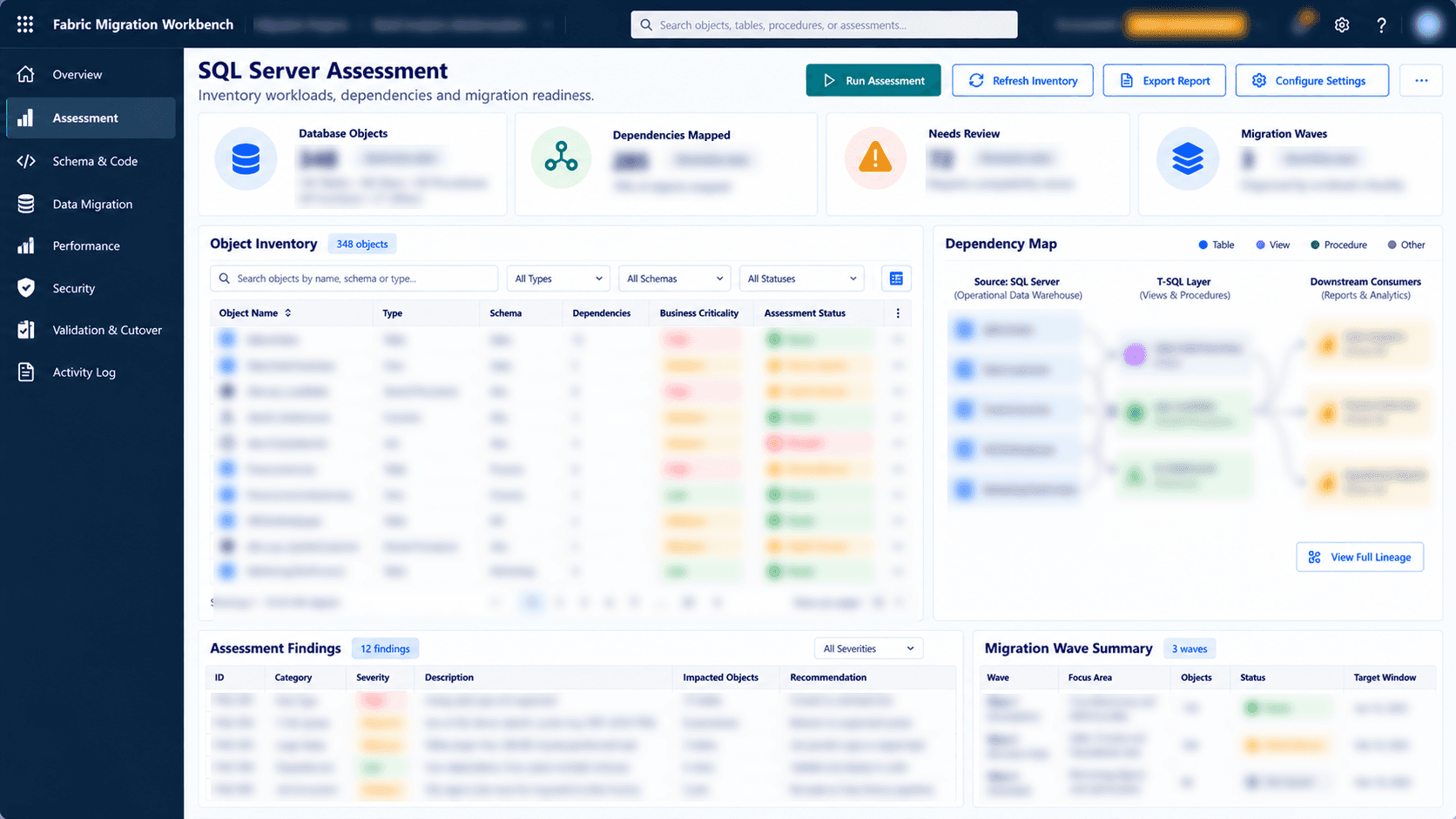
- SQL Server assessment: The existing databases, schemas, workloads, dependencies, data volumes, schedules, security objects, and downstream consumers were assessed and prioritized according to business criticality, complexity, and operational risk.
- Schema compatibility: Microsoft Fabric Migration Assistant for Data Warehouse was proposed to support schema migration and guided remediation, with additional review for incompatible scripts, dependencies, data types, constraints, and physical design.
- Controlled data migration: Fabric Data Factory copy capabilities were used as the proposed data movement mechanism, with full, incremental, staged, or partition-aware approaches selected according to data volume, latency, and source-system constraints.
- Data reconciliation: Source and target environments were compared using row counts, aggregates, key business measures, and selected record-level samples to provide evidence that migrated data remained consistent.
- Code remediation: Stored procedures and functions were reviewed for SQL Server-specific syntax and behavior, with incompatible logic refactored into supported Fabric patterns while preserving validated business outcomes.
- Performance optimization: Critical queries and workloads were benchmarked against agreed expectations, with target-side SQL, data design, concurrency, refresh windows, and Fabric capacity consumption evaluated before cutover.
- Security and governance: Existing SQL Server users, roles, permissions, and sensitive-data controls were mapped to appropriate Microsoft Entra identities and Fabric security mechanisms using least-privilege principles.
- Validation and cutover: Functional testing, source-to-target reconciliation, performance testing, security validation, business acceptance, rollback planning, and stabilization monitoring were incorporated into the migration process.
How we delivered it.
Explore the Solution Through visuals
What changed for the client.
The proposed migration establishes a structured foundation for moving enterprise SQL Server workloads into Microsoft Fabric Warehouse while maintaining focus on data trust, code continuity, performance visibility, security assurance, and operational risk management.
- Migration readiness: A documented inventory, compatibility assessment, dependency map, and prioritized remediation plan provide clearer visibility into migration scope.
- Data trust: Source-to-target reconciliation across row counts, aggregates, key measures, and selected records provides evidence for validating migrated data.
- Code continuity: Stored procedures and functions can be validated against approved source behavior, with exceptions and intentional changes documented.
- Performance visibility: Repeatable workload benchmarks provide measurable evidence of target query behavior, execution time, and Fabric capacity consumption rather than relying on assumptions.
- Security assurance: Role and permission mapping, least-privilege access, and positive and negative access tests provide a structured basis for validating the target security model.
- Lower migration risk: Phased deployment, acceptance criteria, cutover checkpoints, rollback planning, and post-migration monitoring create a controlled path for transitioning downstream consumers.
The numbers behind the rollout.
The full integration layer.
Other engagements worth a look.
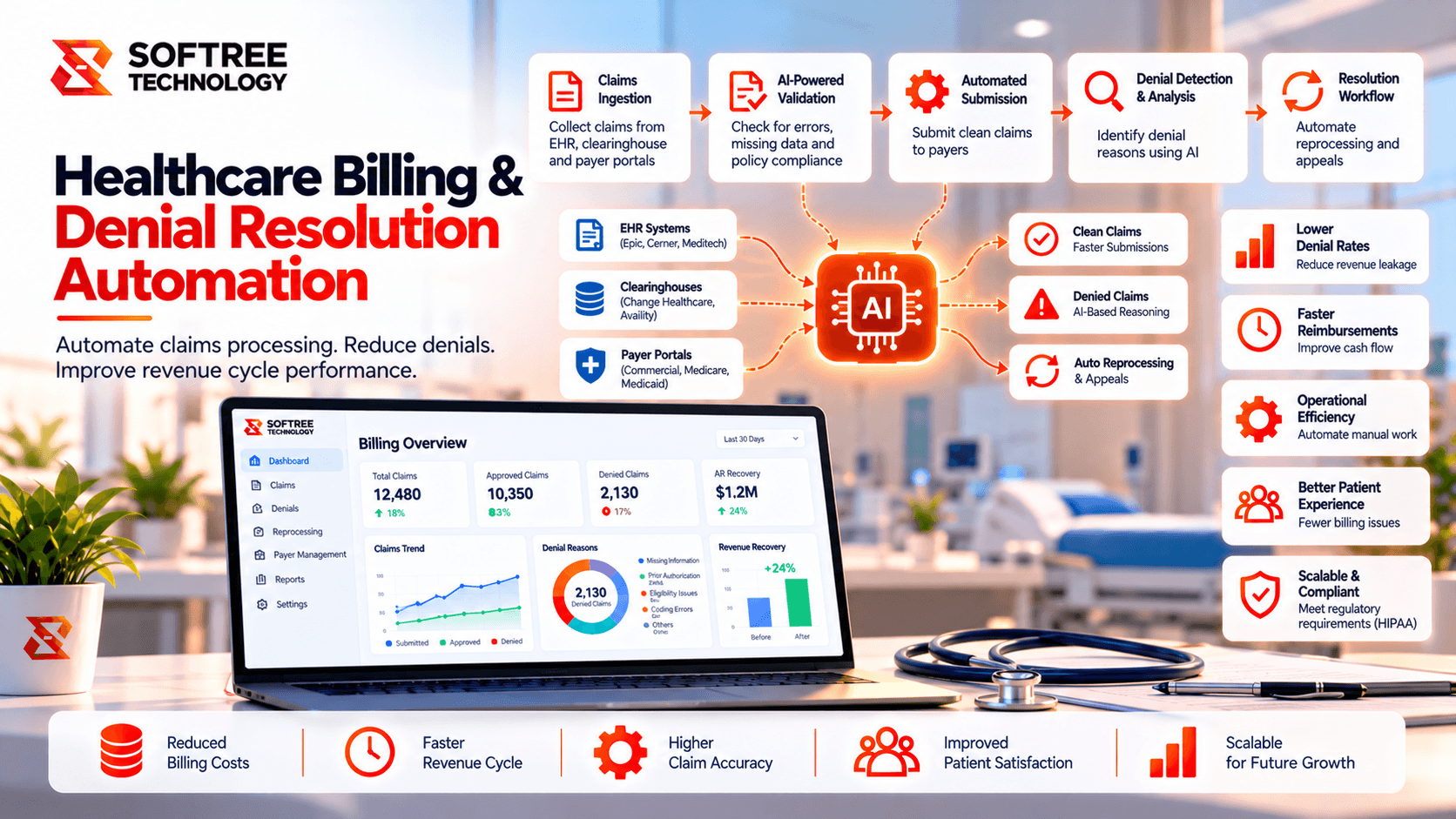
Healthcare Billing & Denial Resolution Agent
A Singapore healthcare provider proposed an AI agent to streamline claim denial investigations, payer research, follow-ups, and specialist review.
Read case study→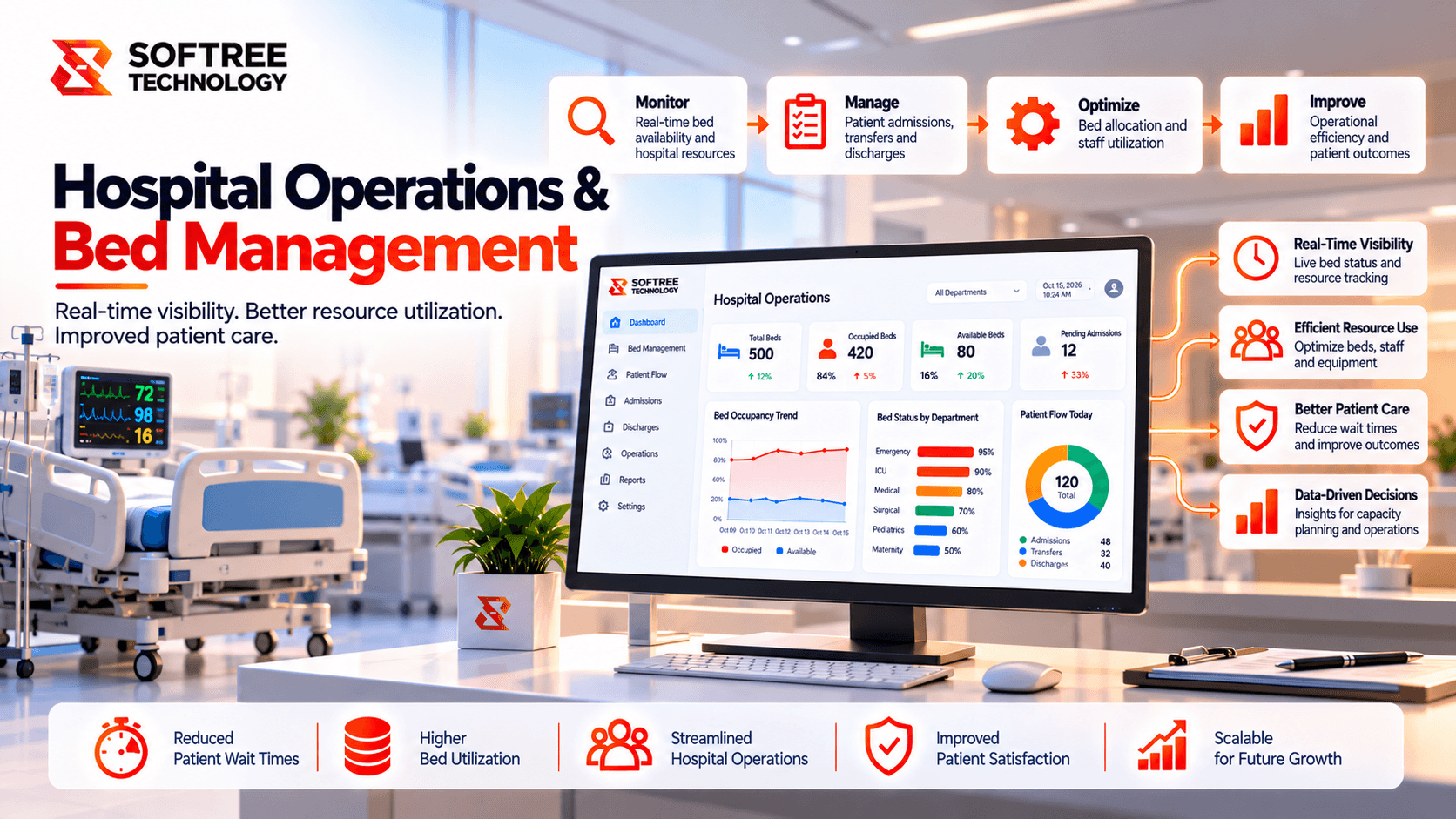
Hospital Operations & Bed Management Agent
A UAE hospital network proposed an agentic AI solution to improve bed readiness, discharge coordination, patient transfers, and operational visibility.
Read case study→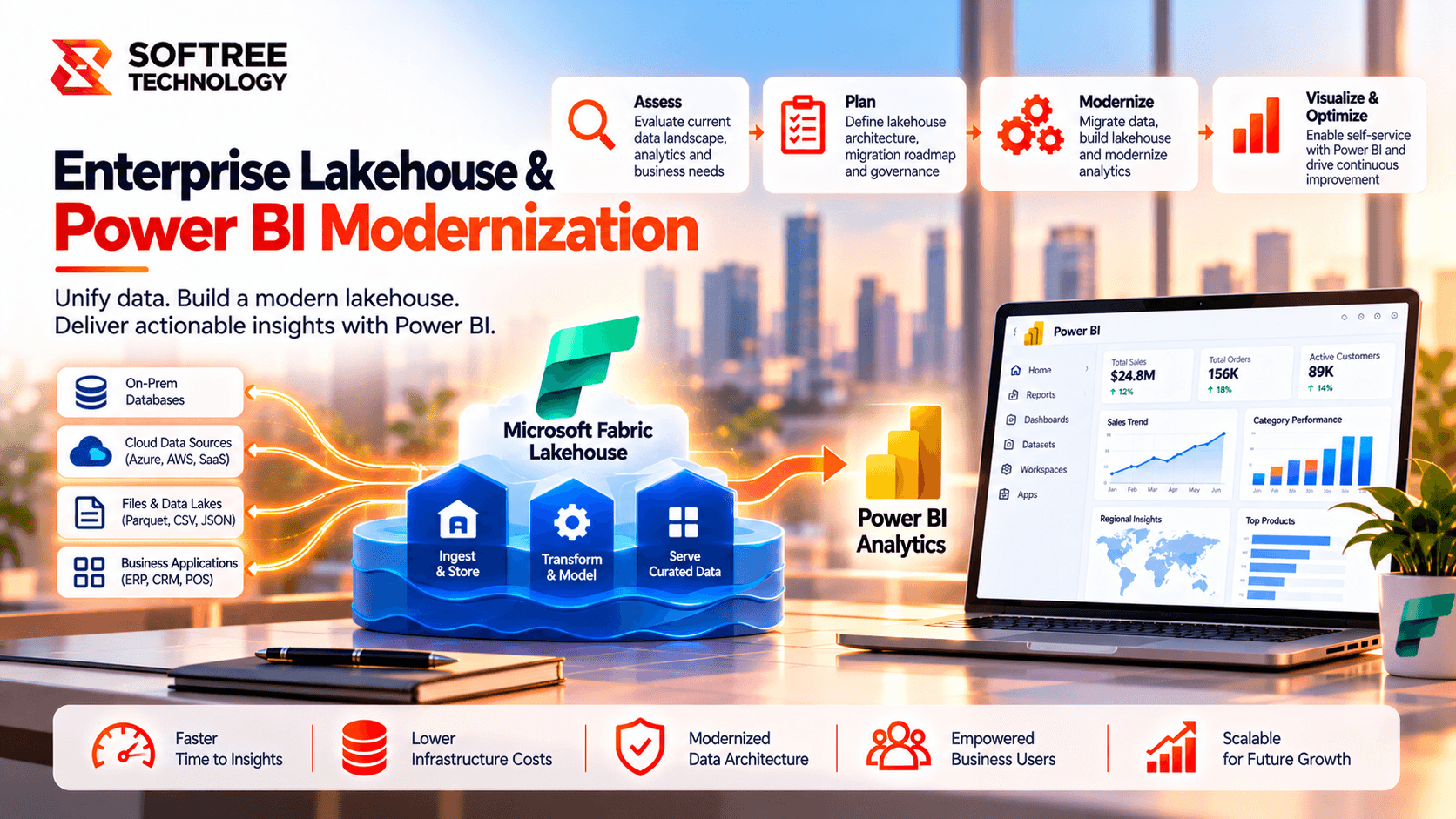
Enterprise Lakehouse Power BI Migration Modernization Services
A U.S. retail and e-commerce company modernized its Azure data platform with Microsoft Fabric, unifying analytics workloads and improving data governance.
Read case study→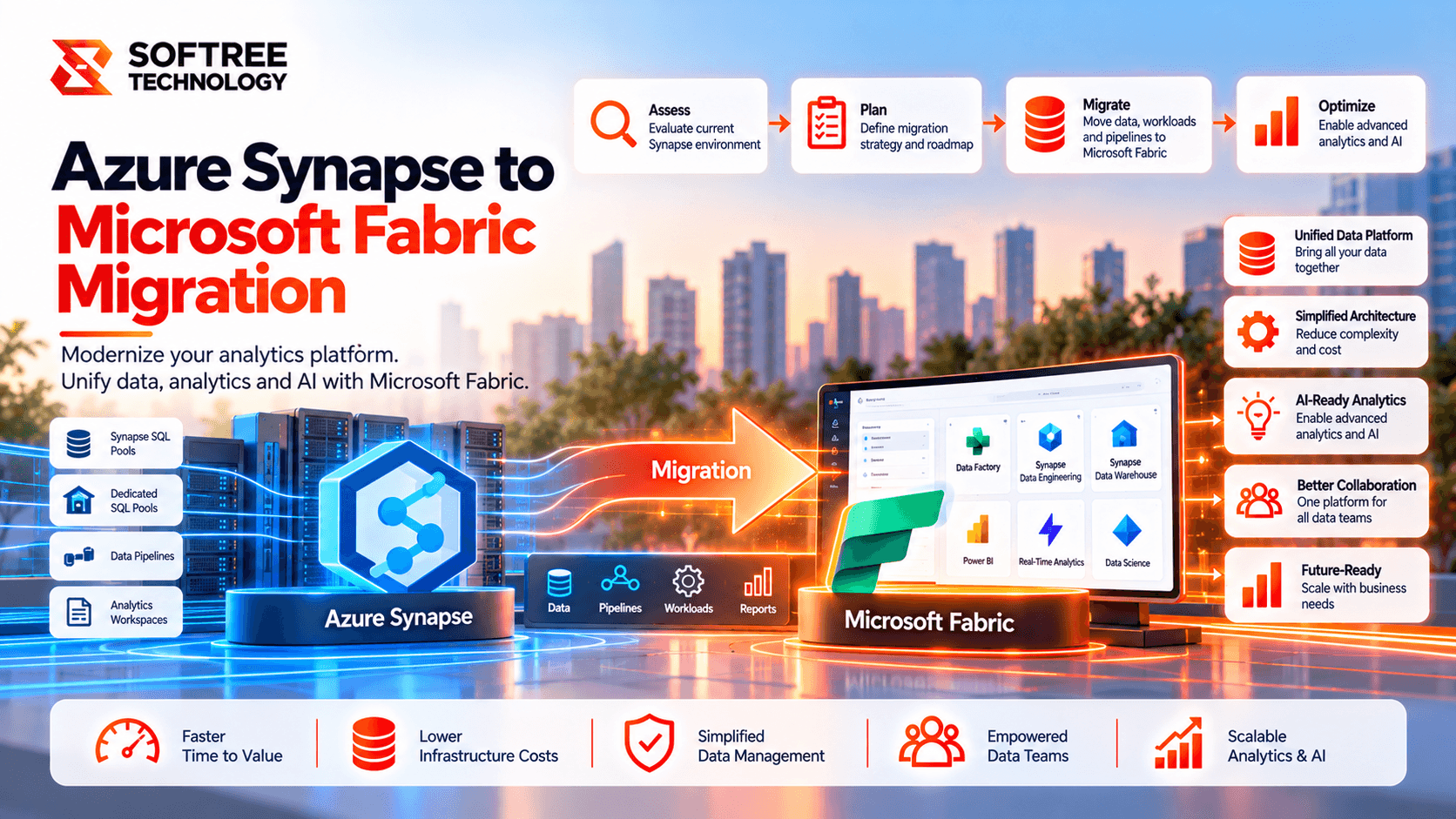
Azure Synapse to Microsoft Fabric Migration
Softree modernized an Azure Synapse environment by migrating data workloads, pipelines, Spark notebooks, OneLake, and Power BI dependencies to Microsoft Fabric.
Read case study→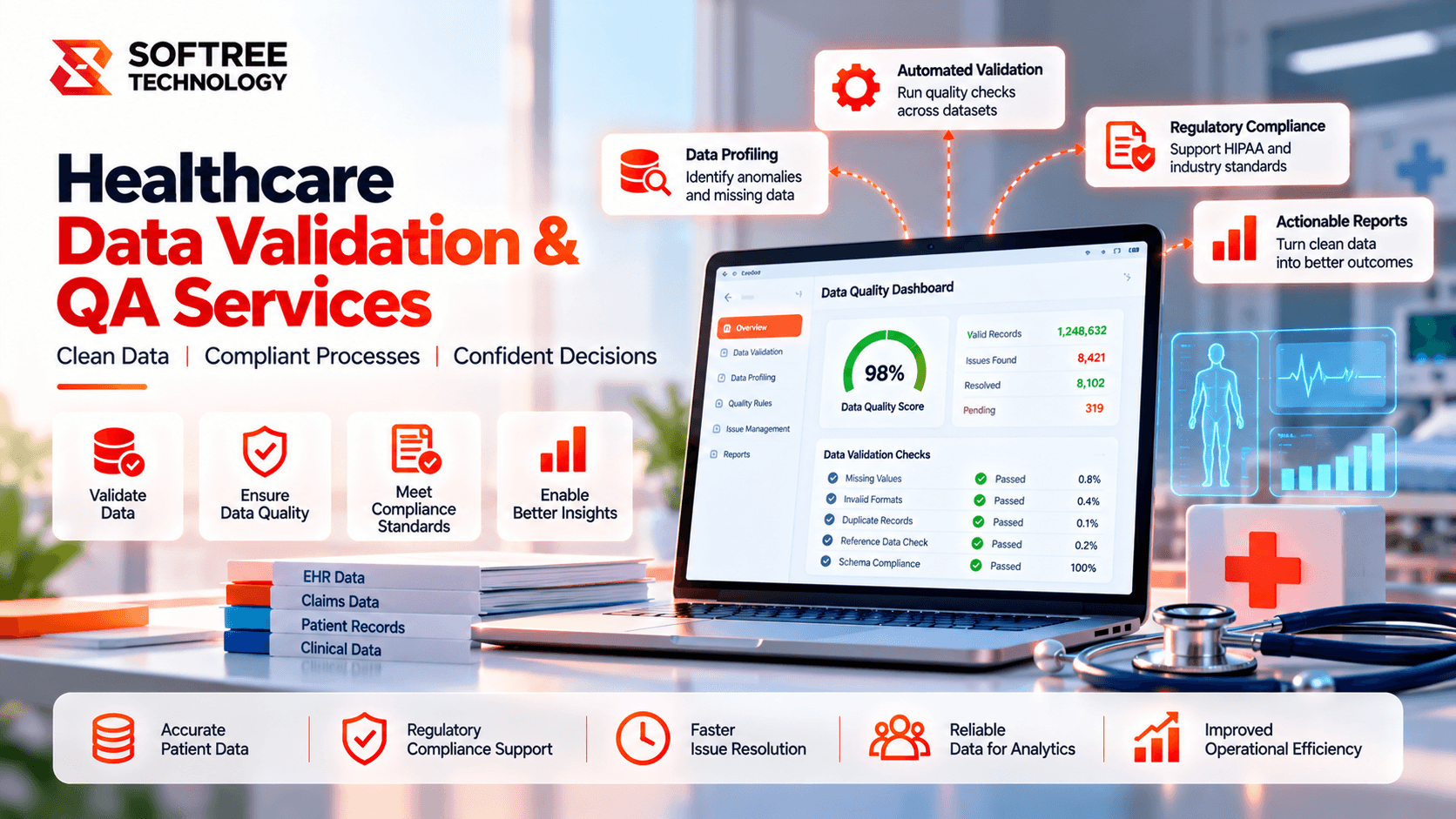
Healthcare Data Validation and Quality Assurance
Explore an AI-powered healthcare data validation platform designed to test data integrity across patient records, lab results, and insurance claims.
Read case study→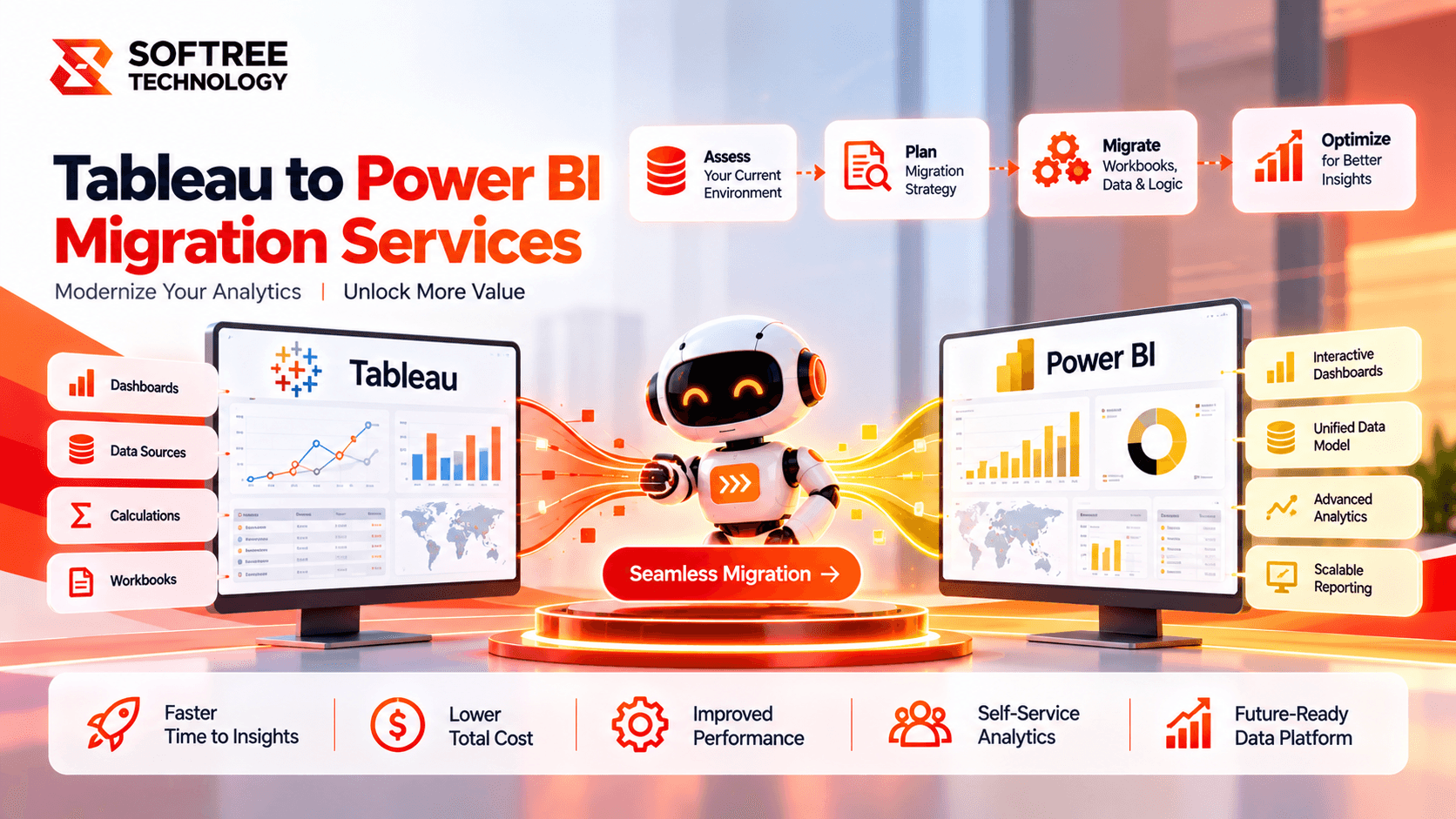
Tableau to Power BI Migration for Enterprise Analytics Modernization
An enterprise organization planned its Tableau-to-Power BI migration to standardize reporting, validate business calculations, and strengthen analytics governance.
Read case study→Frequently asked questions.
Build faster with a reliable offshore engineering partner.
Partner with Softree to accelerate product delivery, modernize enterprise systems, and scale with confidence.

What we offer
Offices
Bengaluru
11th Floor, Prestige Tech Park, Platina 2 · Outer Ring Rd, Kadubeesanahalli · Bengaluru, Karnataka 560087, India
Cuttack
PLOT B6-1628, SECTOR-10, CDA · Cuttack, Odisha 753014 · India
San Francisco
San Francisco, CA 94108 · United States
Got a question, challenge, or idea?
Fill out the form or pick a time on our scheduler.
30-min discovery call
Same Calendly as our booking page · instant invite