Enterprise Lakehouse Power BI Migration Modernization Services
A U.S. retail and e-commerce company modernized its Azure data platform with Microsoft Fabric, unifying analytics workloads and improving data governance.
Business Process Challenges
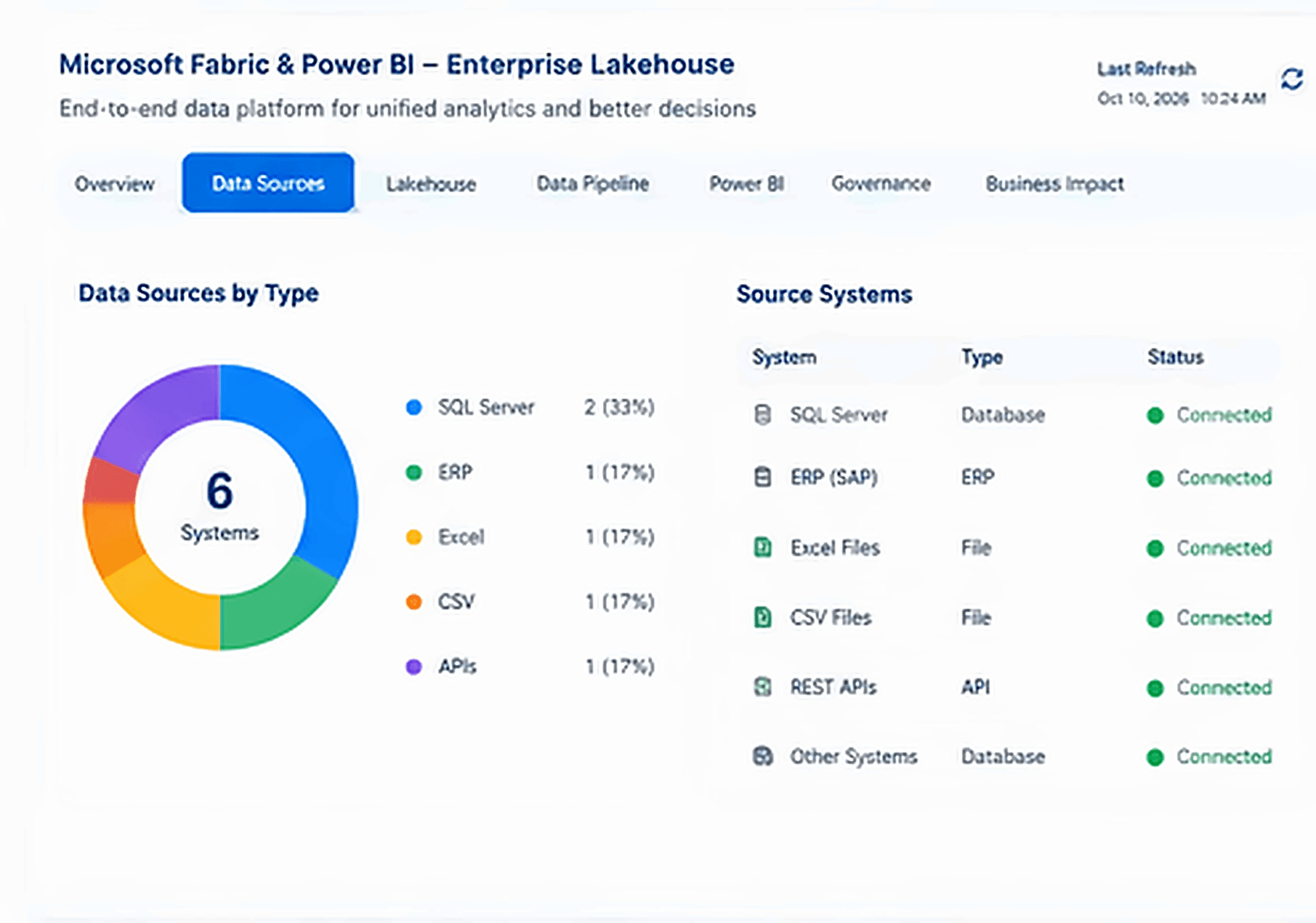
A U.S.-based manufacturing organization relied on a combination of operational, commercial, and enterprise systems to support critical business functions, including production, inventory management, procurement, order fulfillment, financial reporting, and enterprise analytics. Although the organization had access to a significant volume of business data, that data was distributed across SQL Server, ERP systems, Excel trackers, CSV exports, and API-fed applications, with each source following different data structures, refresh patterns, and ownership models.
As reporting requirements continued to grow, teams were maintaining separate datasets and repeatedly performing data extraction, transformation, and reconciliation activities. Business logic was often duplicated across spreadsheets, report-specific queries, and individual reporting processes, which increased operational effort and made it difficult to establish a single, trusted version of important business measures.
The fragmented data environment also created challenges around data lineage, ownership, and traceability, making it harder for teams to understand where information originated, how it was transformed, and which reports or processes depended on it. At the same time, the growing number of reports and independent refresh paths introduced additional complexity in maintaining reliable refresh schedules and scaling analytics workloads.
The key challenges included:
- Fragmented source systems and ownership models, which required analysts to locate, extract, and reconcile information from multiple systems before it could be used for reporting.
- Repeated manual data transformations, where similar business logic was recreated across spreadsheets and report-specific queries instead of being implemented through reusable data pipelines.
- Inconsistent KPI definitions, resulting in different reports potentially calculating the same business metric differently and reducing confidence in analytical results.
- Limited data lineage and ownership visibility, making root-cause analysis, change impact assessment, and accountability for curated datasets more difficult.
- Increasing refresh and scaling complexity, as additional reports and data workloads created more refresh paths and operational dependencies that needed to be maintained.
Our Strategic Approach
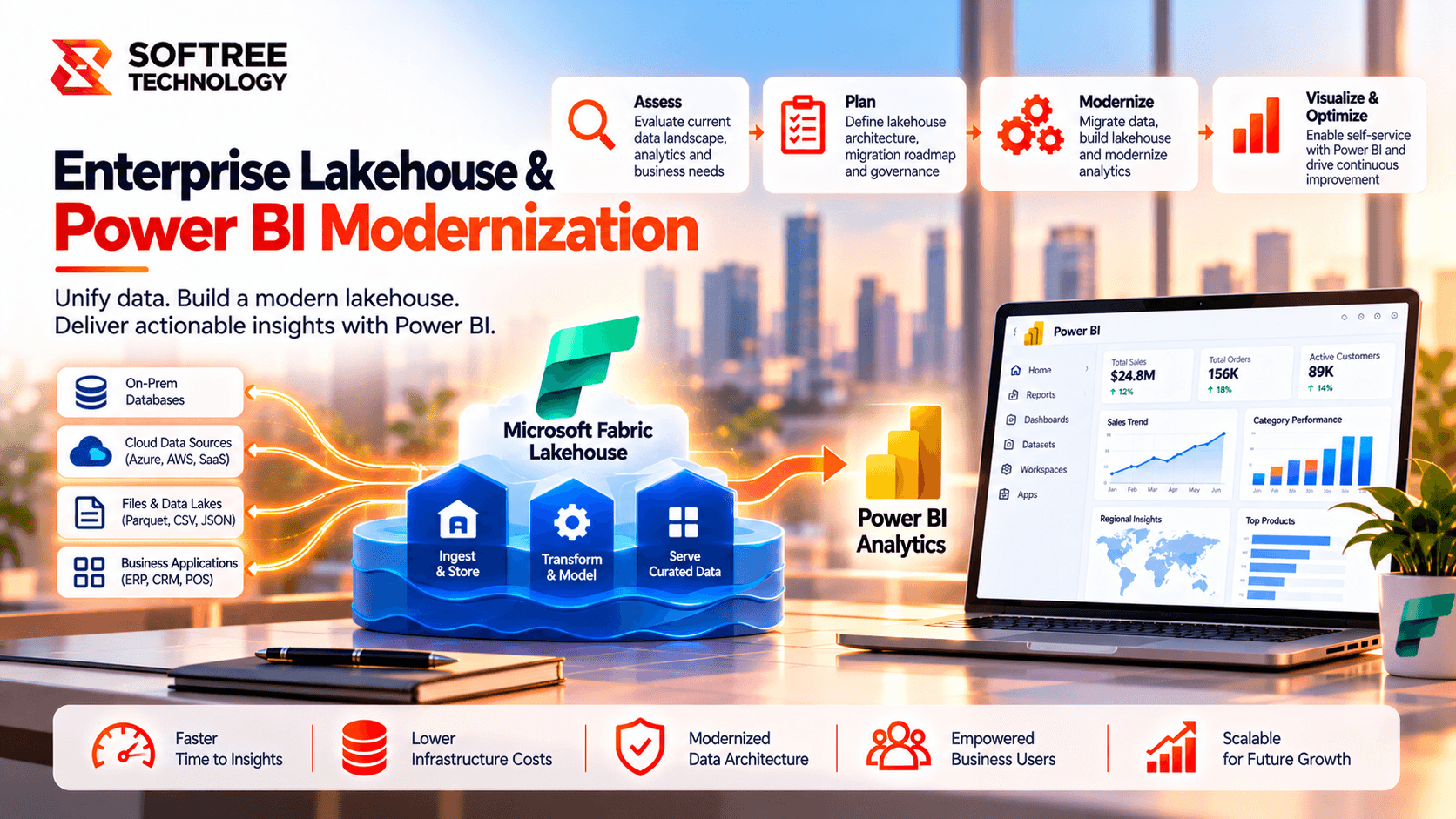
Softree took a structured modernization approach to create a centralized enterprise lakehouse and analytics foundation using Microsoft Fabric and Power BI. The approach focused on bringing fragmented data sources together, establishing reusable data engineering patterns, standardizing business definitions, and creating governed Power BI reporting while maintaining data quality, security, and traceability throughout the platform.
Assess & Discover
Softree first reviewed the existing data landscape, including SQL Server, ERP systems, Excel files, CSV exports, APIs, reporting datasets, refresh requirements, dependencies, ownership, and security rules. The assessment helped identify data sources, business priorities, integration requirements, and potential risks before implementation began.
Design the Enterprise Lakehouse
A Microsoft Fabric architecture was designed around OneLake and Lakehouse, with Bronze, Silver, and Gold layers to separate raw, refined, and curated data. Each curated dataset was treated as a governed data product with defined ownership, data grain, refresh expectations, quality rules, and approved downstream usage.
Build Data Ingestion & Pipelines
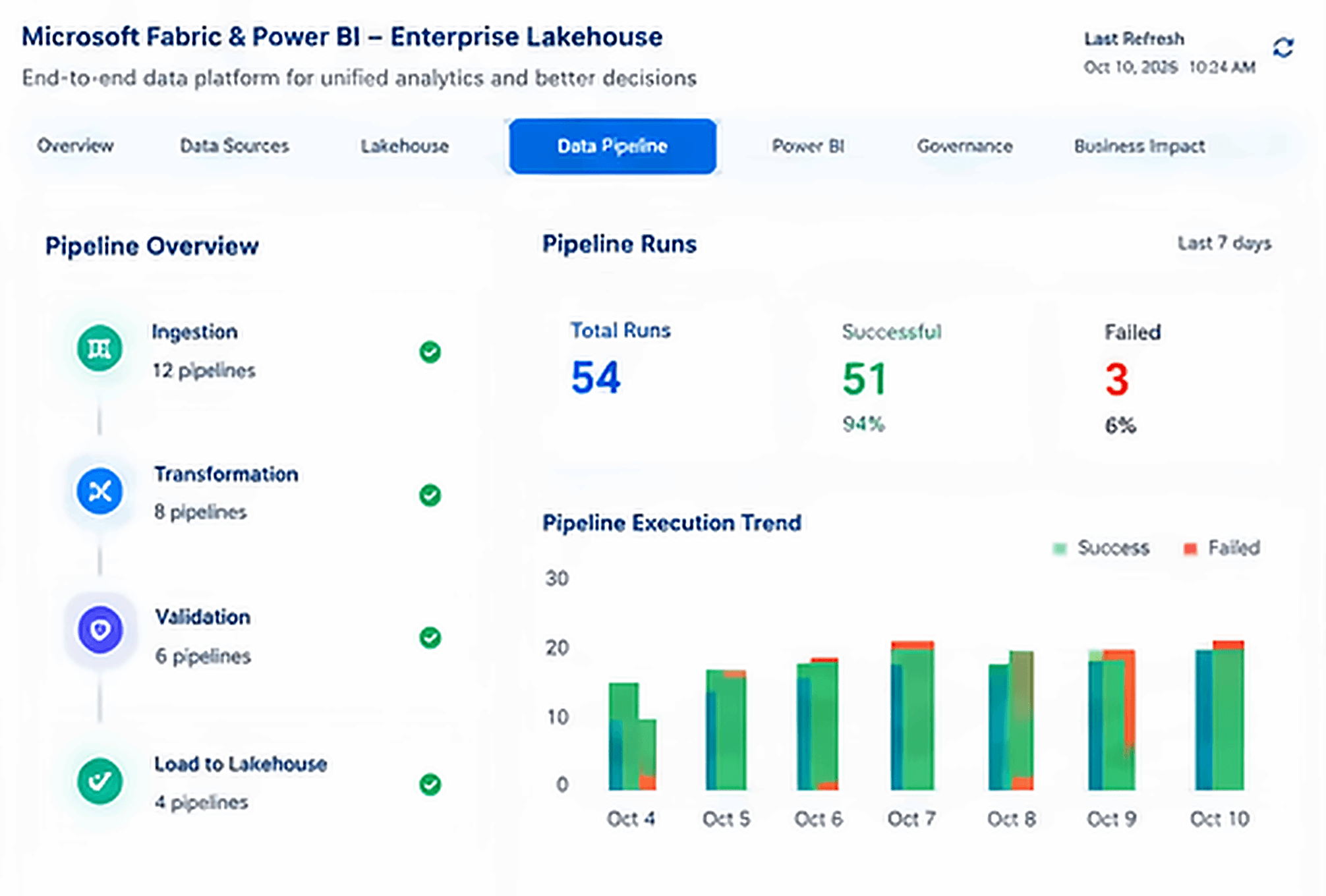
Fabric Data Factory was used to establish repeatable ingestion and orchestration patterns for different source systems. Pipelines were designed around appropriate full or incremental loading strategies, reliable watermarks or change tracking where available, run-level metadata, retry handling, and mechanisms for quarantining rejected records.
Engineer & Curate Data
Data was processed through the lakehouse using appropriate engineering technologies, including Spark, PySpark, and SQL. Raw data was progressively cleaned, standardized, validated, and transformed into curated datasets that could support manufacturing, inventory, procurement, sales and fulfillment, finance, and enterprise reporting requirements.
Modernize Power BI Analytics
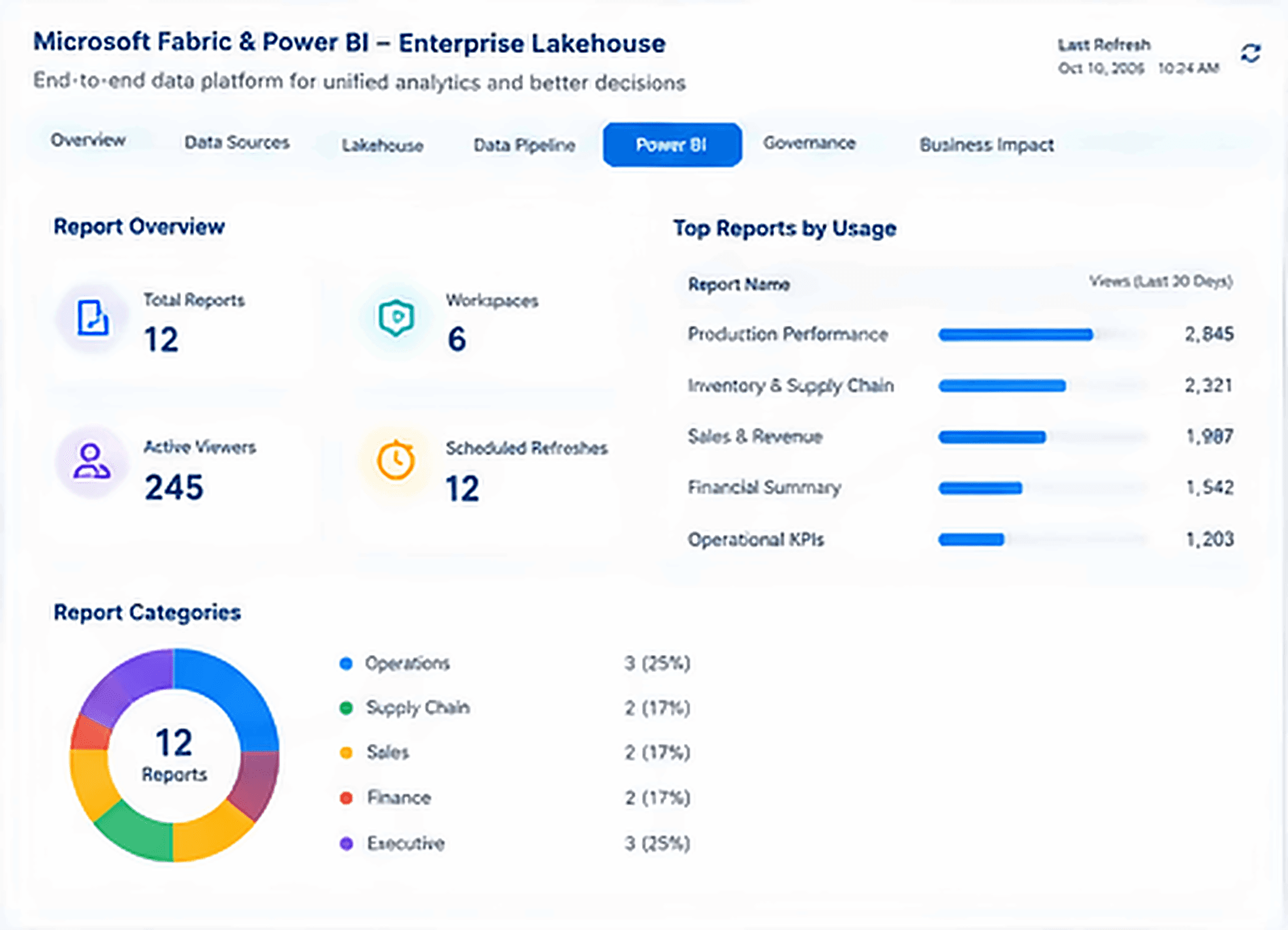
Power BI was integrated with the curated Fabric data foundation to create governed semantic models and consistent reporting. Shared relationships, measures, business definitions, and security rules were established so that different reports could use consistent KPIs rather than recreating calculations independently.
How we delivered it.
Explore the Solution Through visuals
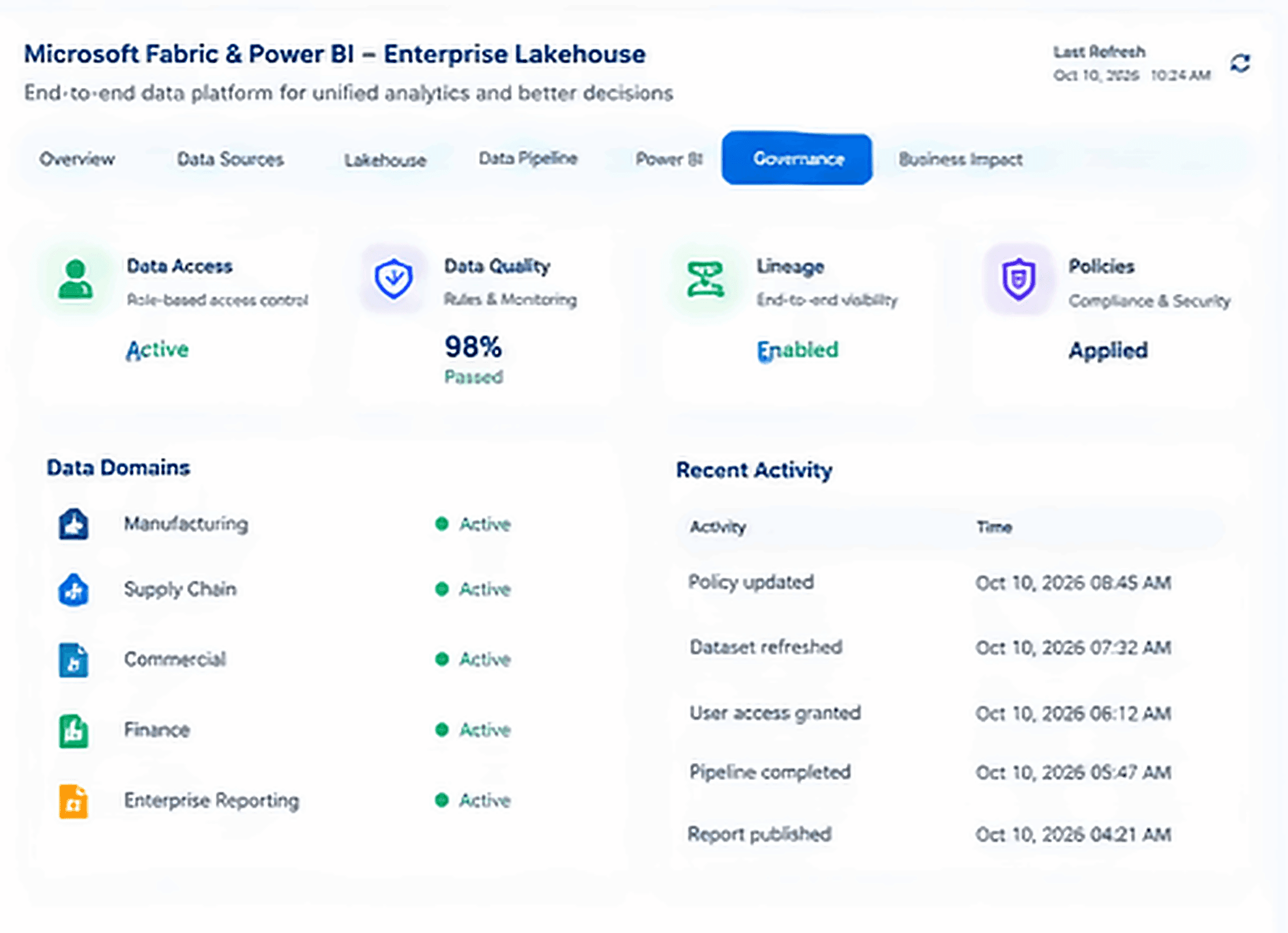

What changed for the client.
The modernization established the foundation for a centralized and governed enterprise analytics platform built around Microsoft Fabric and Power BI.
The expected business value includes:
- A common data foundation across business domains.
- Reusable facts, dimensions, and standardized business definitions.
- Reduced spreadsheet-based reconciliation and manual data preparation.
- More consistent and governed Power BI reporting.
- Clearer ownership, access controls, and data lineage
- Repeatable patterns for onboarding new sources and analytics workloads
The numbers behind the rollout.
The full integration layer.
Other engagements worth a look.
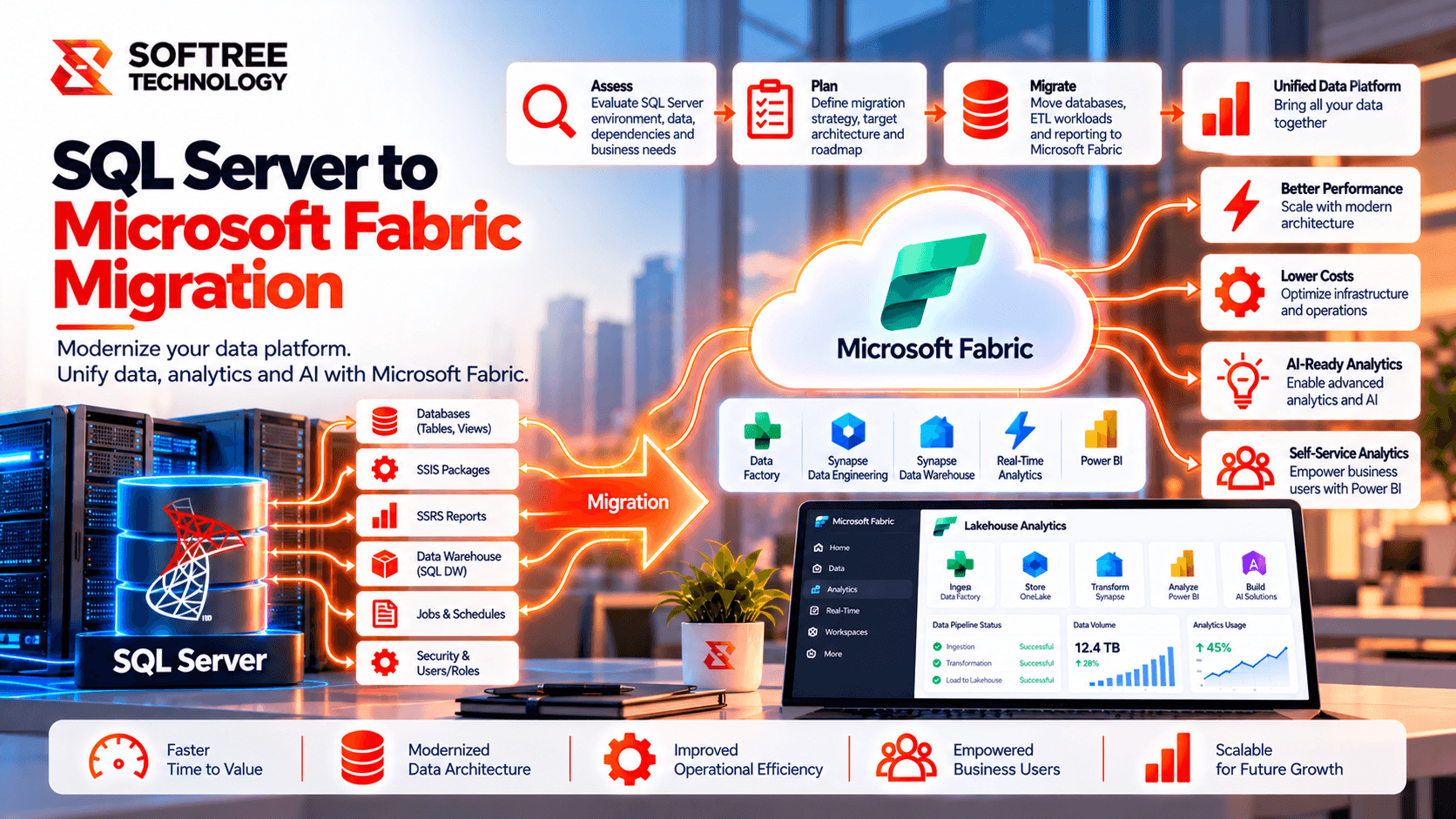
SQL Server to Microsoft Fabric Data Warehouse Migration
Modernizing an enterprise SQL Server data warehouse with Microsoft Fabric while maintaining data quality, performance, security, and reporting continuity.
Read case study→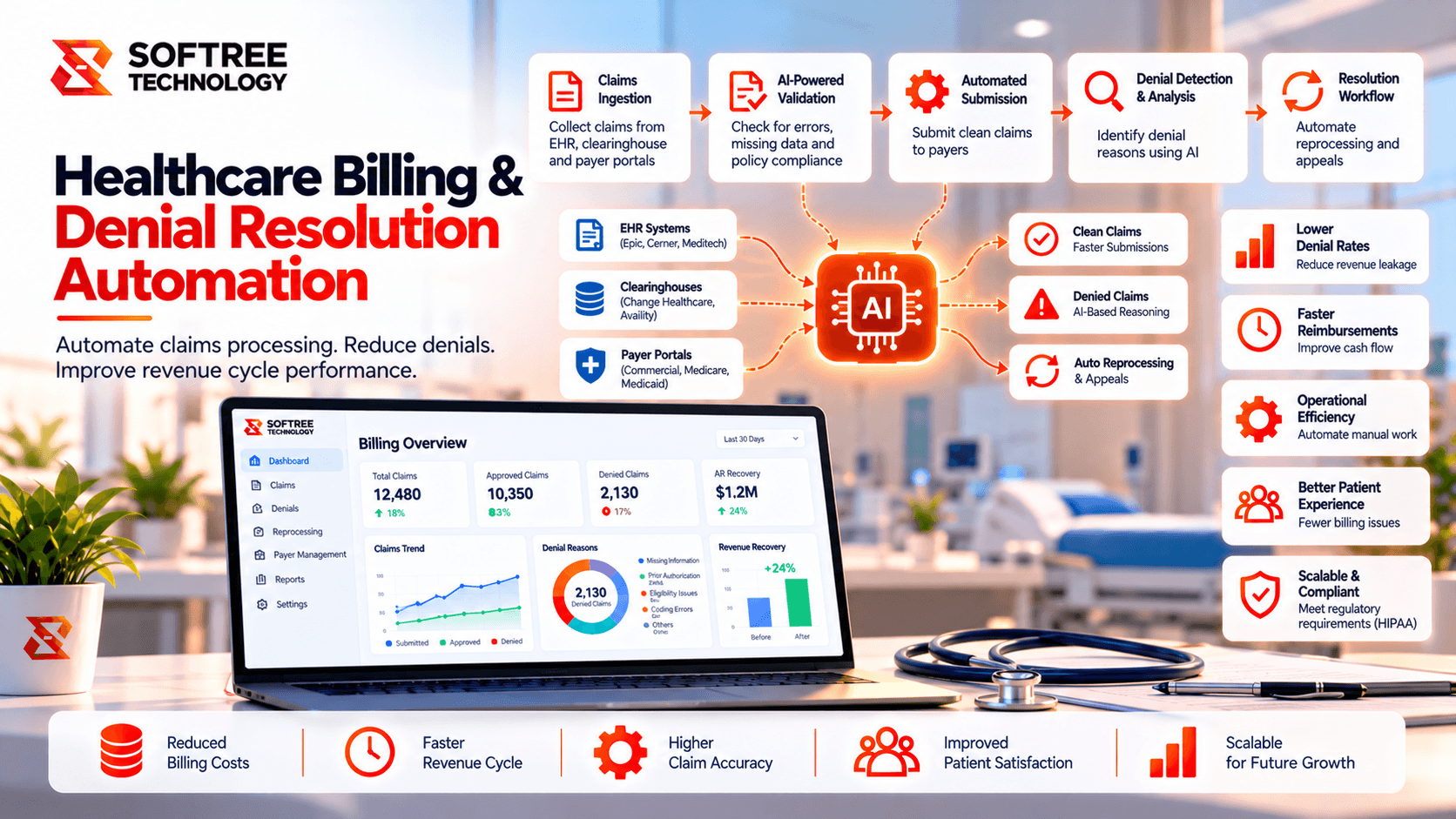
Healthcare Billing & Denial Resolution Agent
A Singapore healthcare provider proposed an AI agent to streamline claim denial investigations, payer research, follow-ups, and specialist review.
Read case study→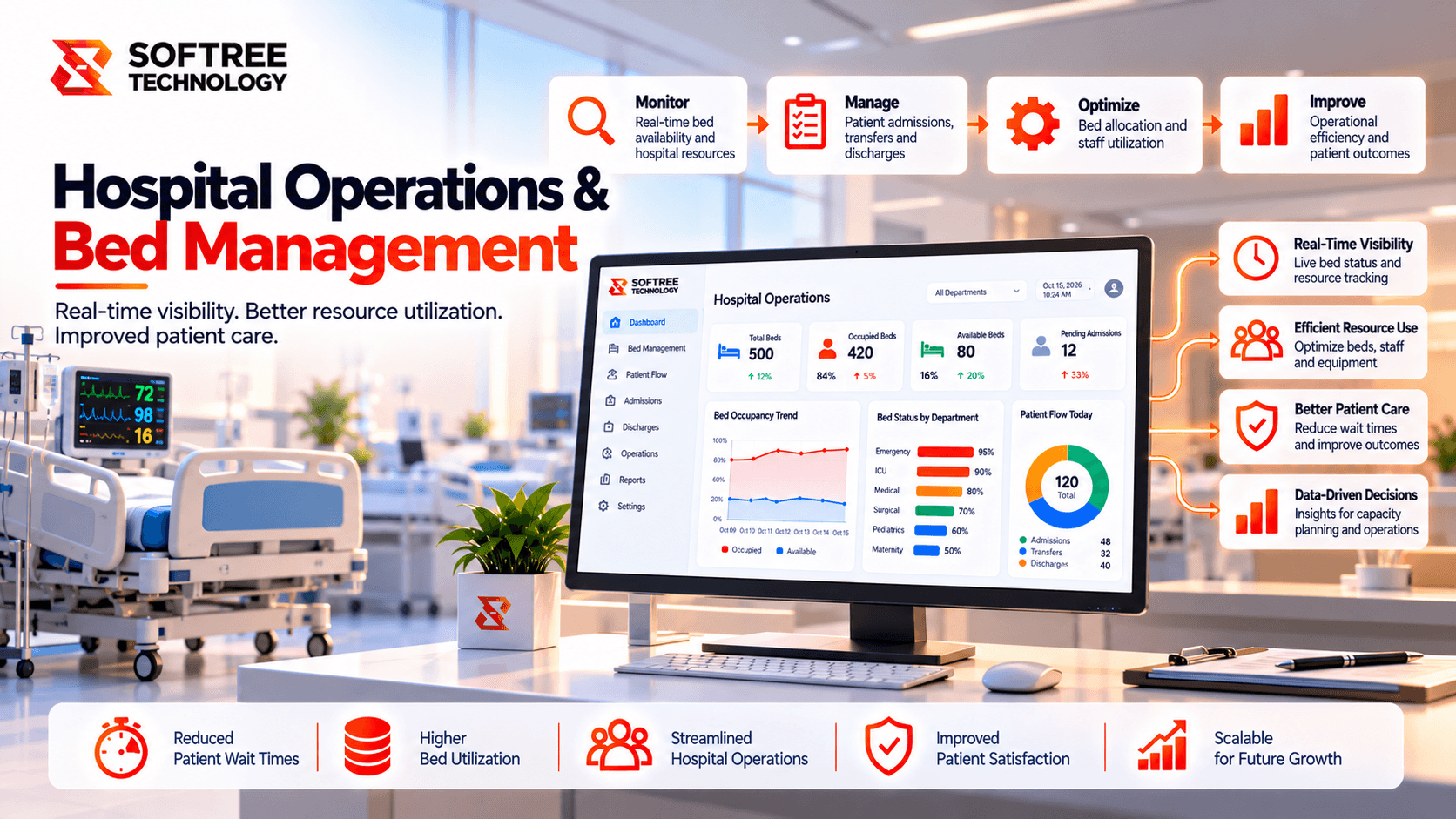
Hospital Operations & Bed Management Agent
A UAE hospital network proposed an agentic AI solution to improve bed readiness, discharge coordination, patient transfers, and operational visibility.
Read case study→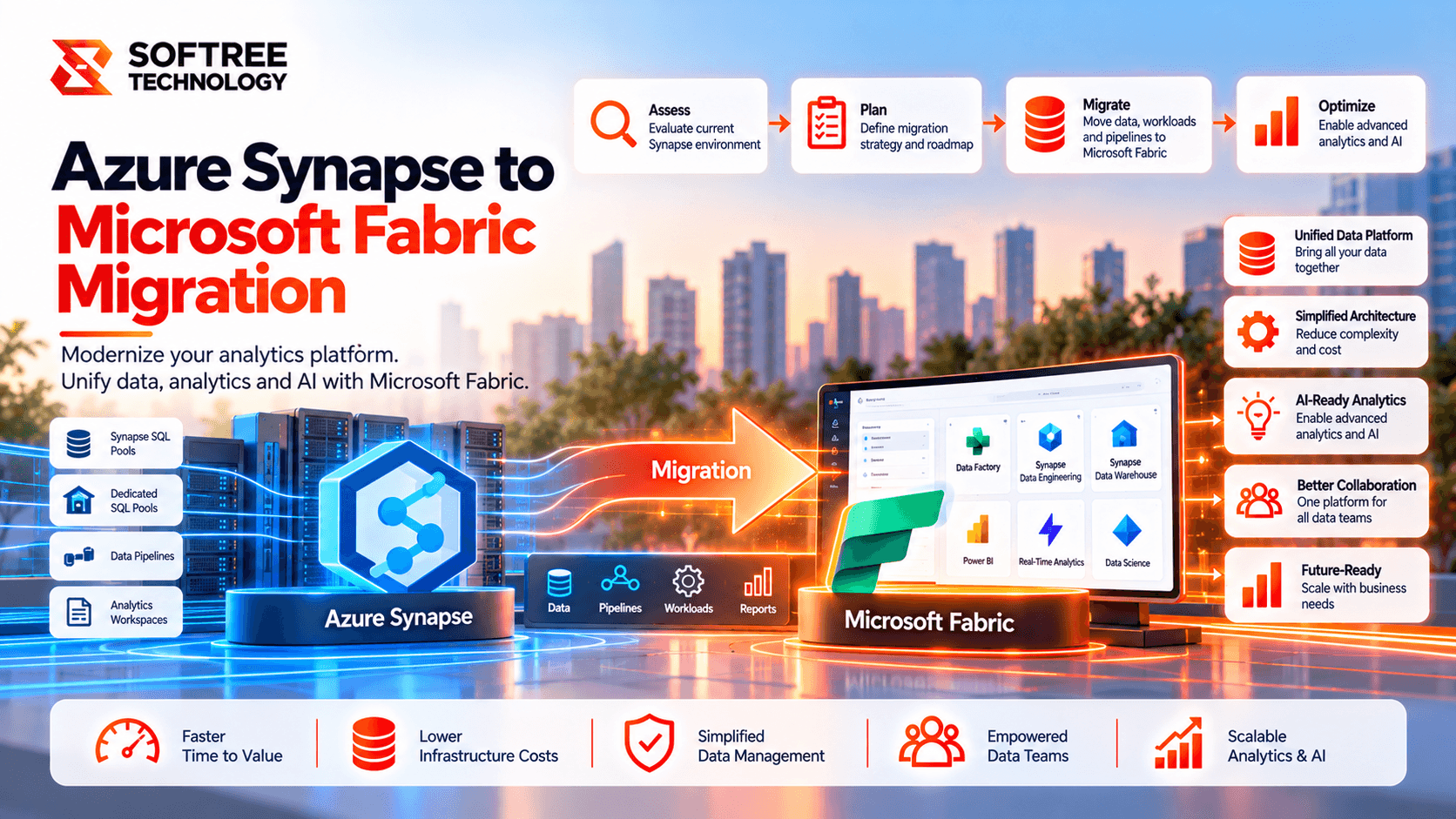
Azure Synapse to Microsoft Fabric Migration
Softree modernized an Azure Synapse environment by migrating data workloads, pipelines, Spark notebooks, OneLake, and Power BI dependencies to Microsoft Fabric.
Read case study→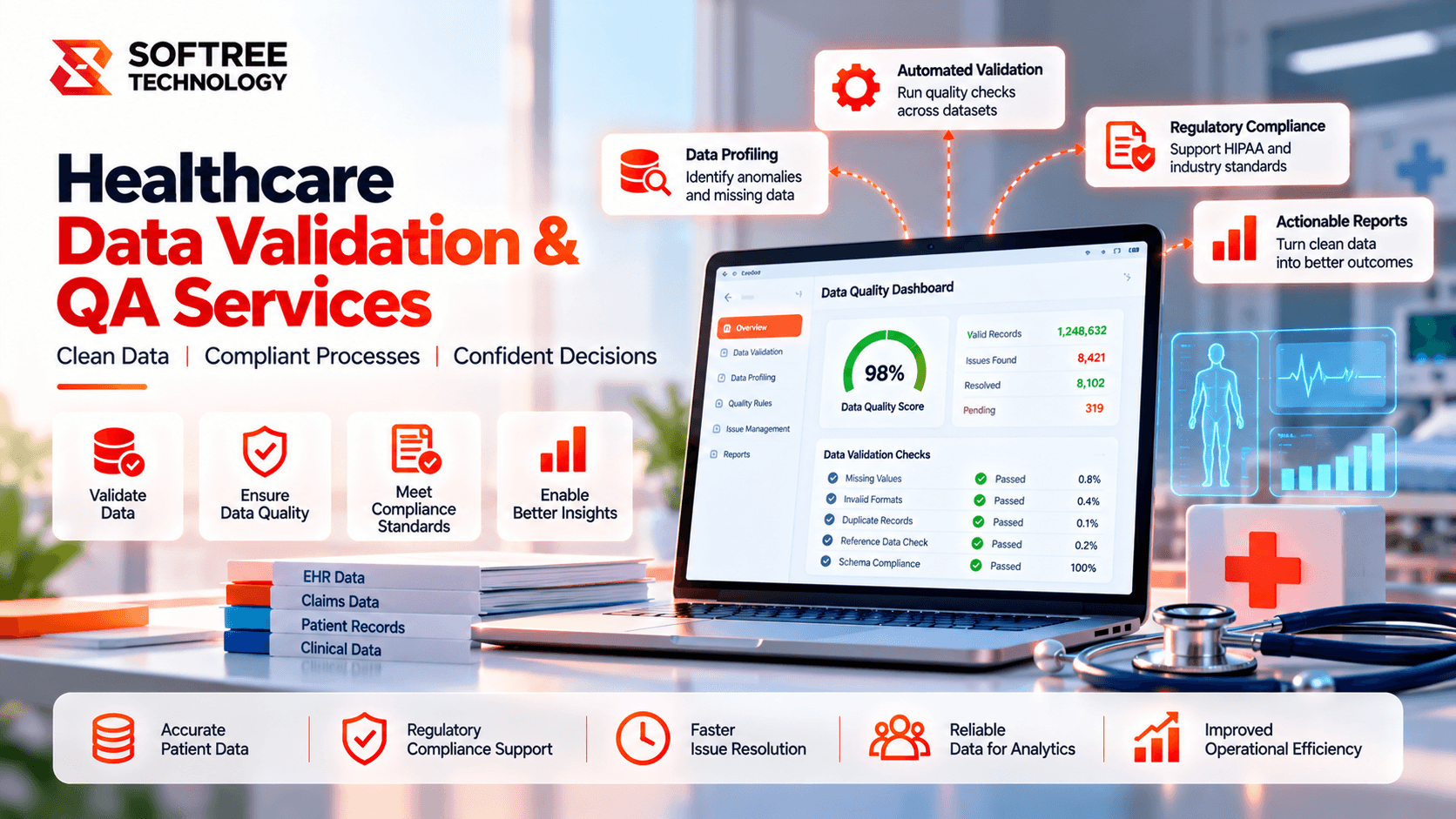
Healthcare Data Validation and Quality Assurance
Explore an AI-powered healthcare data validation platform designed to test data integrity across patient records, lab results, and insurance claims.
Read case study→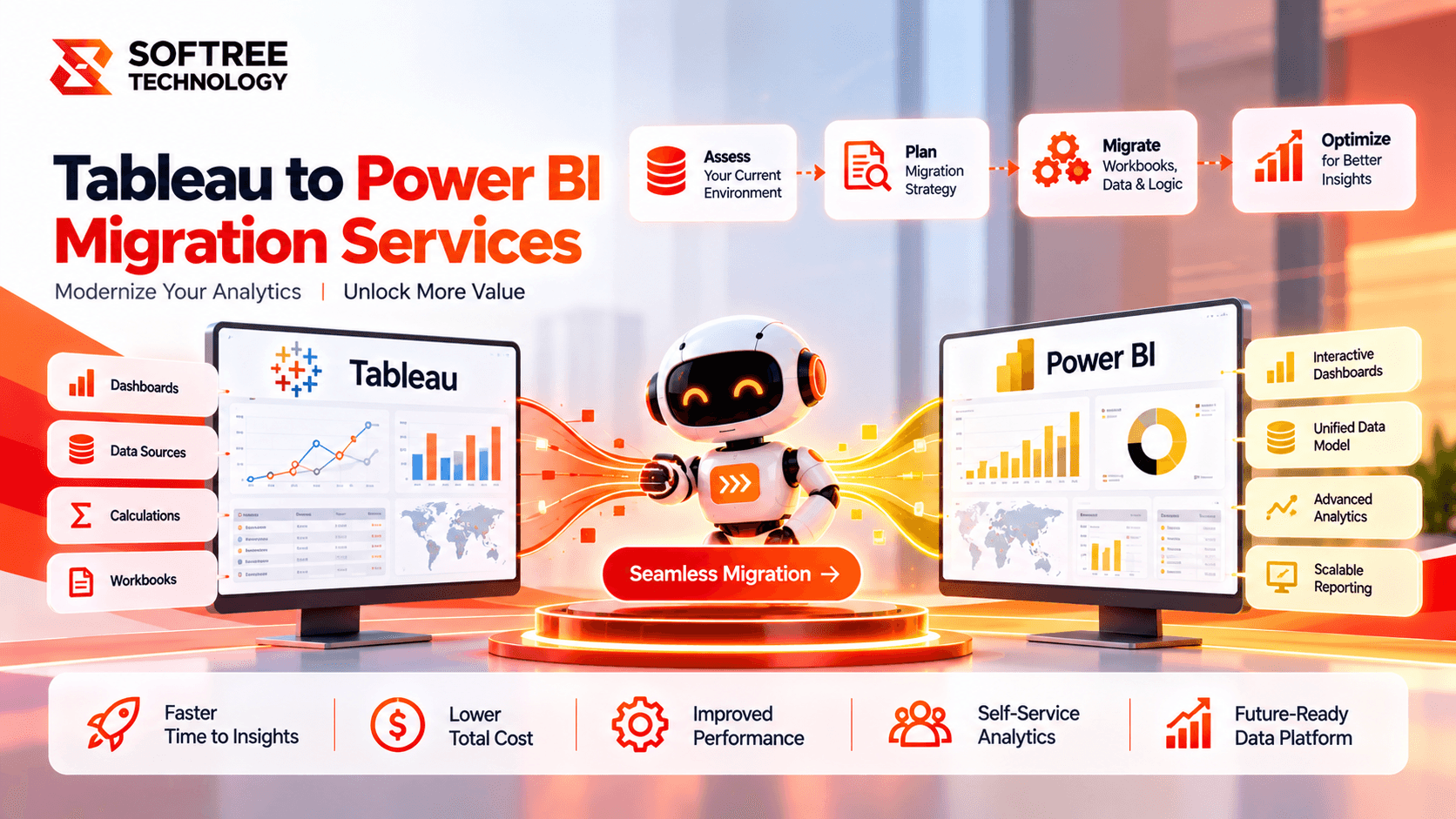
Tableau to Power BI Migration for Enterprise Analytics Modernization
An enterprise organization planned its Tableau-to-Power BI migration to standardize reporting, validate business calculations, and strengthen analytics governance.
Read case study→Frequently asked questions.
Build faster with a reliable offshore engineering partner.
Partner with Softree to accelerate product delivery, modernize enterprise systems, and scale with confidence.

What we offer
Offices
Bengaluru
11th Floor, Prestige Tech Park, Platina 2 · Outer Ring Rd, Kadubeesanahalli · Bengaluru, Karnataka 560087, India
Cuttack
PLOT B6-1628, SECTOR-10, CDA · Cuttack, Odisha 753014 · India
San Francisco
San Francisco, CA 94108 · United States
Got a question, challenge, or idea?
Fill out the form or pick a time on our scheduler.
30-min discovery call
Same Calendly as our booking page · instant invite