Introduction
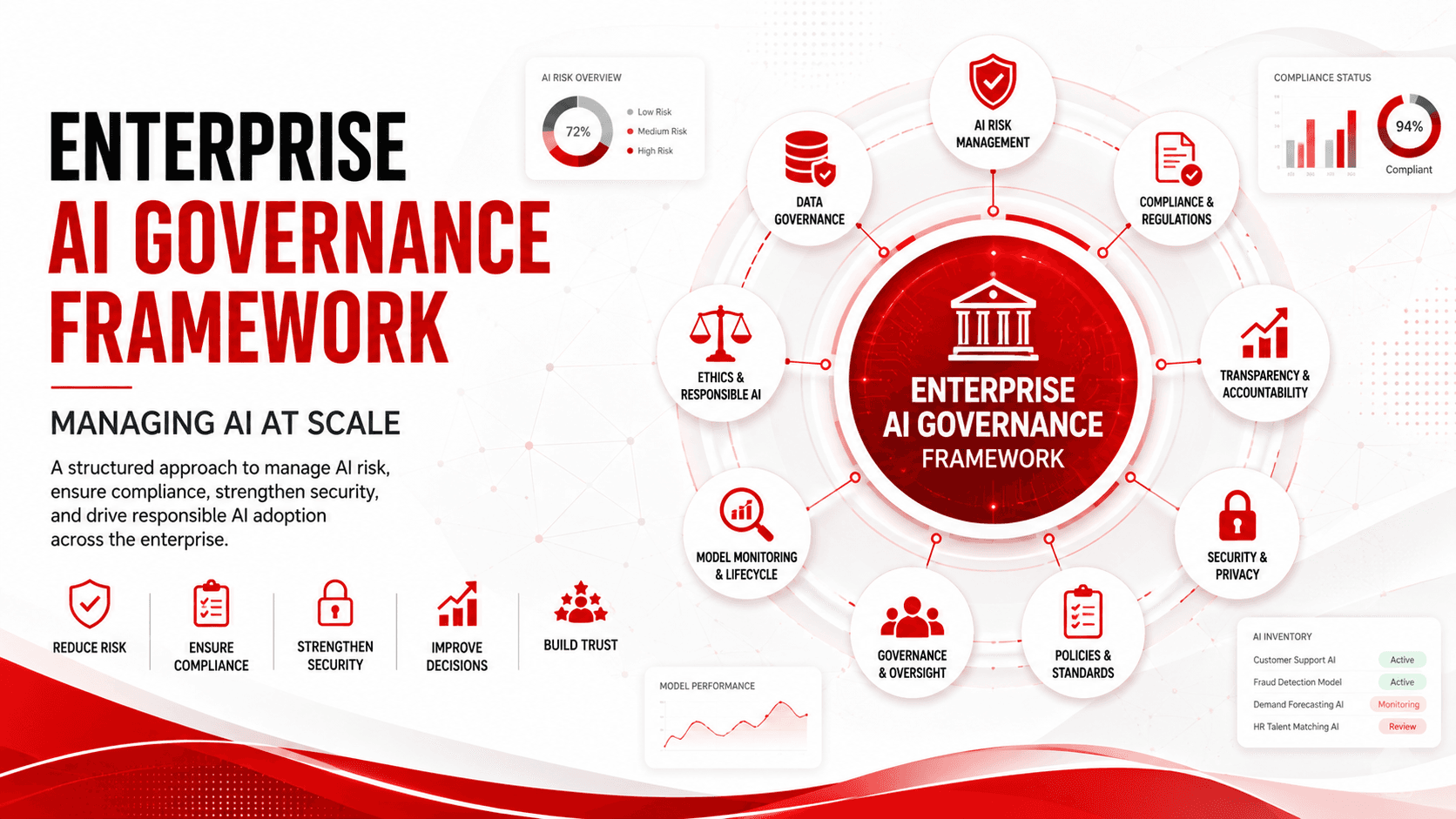
Artificial intelligence is becoming a core part of enterprise operations, enabling organizations to automate processes, improve decision-making, and deliver better customer experiences. However, large-scale AI adoption also introduces challenges related to governance, security, compliance, ethics, and accountability. An Enterprise AI Governance Framework provides the policies, processes, and oversight needed to manage AI responsibly while aligning innovation with business objectives.
Key Takeaways
An Enterprise AI Governance Framework helps organizations establish responsible AI practices, manage risks, strengthen compliance, improve transparency, and build scalable AI programs that deliver measurable business value.
Why AI Governance Matters
Without proper governance, AI initiatives can become fragmented, increasing the risk of inconsistent decision-making, regulatory issues, data quality problems, and security vulnerabilities. A governance framework creates a structured approach to managing AI across the enterprise.
Core Components of an AI Governance Framework
A successful governance framework includes:
- AI risk management
- Data governance
- Security and privacy controls
- Responsible and ethical AI practices
- Model monitoring and lifecycle management
- Regulatory compliance
- Governance committees and ownership
Business Benefits
Organizations implementing AI governance can achieve:
- Reduced operational and compliance risks
- Faster and more responsible AI adoption
- Improved business transparency
- Better decision-making
- Stronger data security
- Increased stakeholder trust
- Long-term AI scalability
Enterprise Use Cases
AI governance supports organizations across industries, including:
- Financial Services
- Healthcare
- Manufacturing
- Retail
- Human Resources
- Customer Service
- Supply Chain Management
Best Practices
To build a successful AI governance program:
- Define clear ownership and accountability.
- Establish governance committees.
- Perform regular AI risk assessments.
- Continuously monitor AI models.
- Maintain documentation and audit trails.
- Promote transparency and responsible AI practices.
Conclusion
Enterprise AI Governance is no longer optional for organizations adopting AI at scale. A well-designed governance framework enables businesses to reduce risks, strengthen compliance, improve transparency, and build trusted AI solutions that support long-term growth.
At Softree Technology, we help organizations design and implement enterprise AI governance frameworks, responsible AI programs, and scalable AI operating models. Our experts work with Microsoft AI technologies, Azure AI, Microsoft Fabric, Copilot Studio, and enterprise automation platforms to ensure AI solutions remain secure, compliant, and aligned with business goals.
Whether you're beginning your AI journey or scaling enterprise AI initiatives, Softree Technology can help you establish the governance foundation needed for sustainable and responsible AI adoption.
Learn more: https://www.softreetechnology.com/