HR Assistant Copilot Agent
How an Enterprise Organization Automated HR Operations Using AI and Microsoft Power Platform
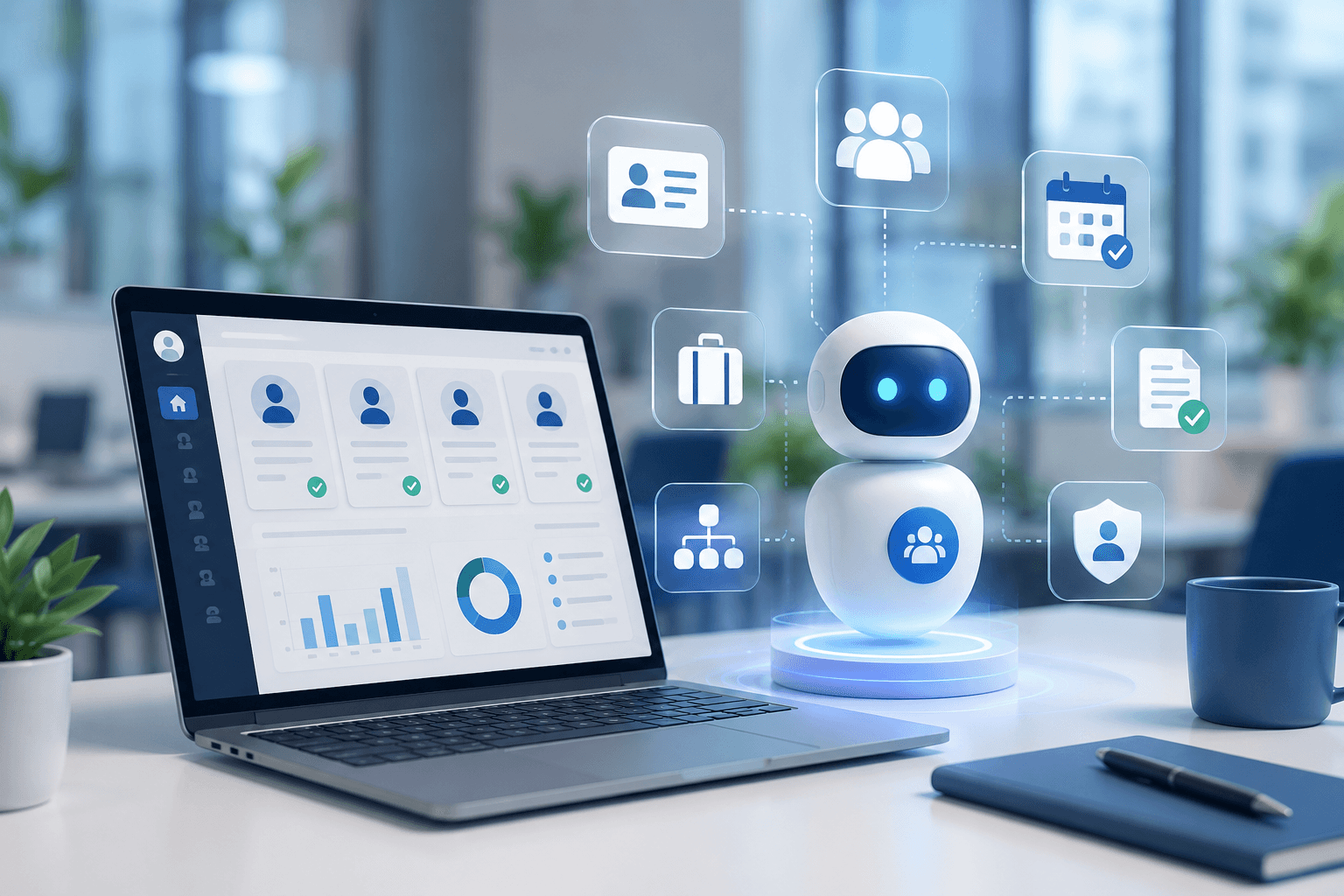
An AI-powered HR Assistant built on Microsoft Power Platform that automates employee onboarding, leave management, and HR workflows. The solution reduces manual effort, improves data accuracy, and enables real-time employee self-service.
Project overview
HR Assistant Copilot Agent
An AI-powered HR Assistant built on Microsoft Power Platform that automates employee onboarding, leave management, and HR workflows. The solution reduces manual effort, improves data accuracy, and enables real-time employee self-service.
The Client Challenge
The client needed governed systems that could ship fast without losing control of data, permissions, or approvals.
Manual Processes
Plant teams relied on spreadsheets and email for production approvals, causing delays and inconsistent data across facilities.
Lack of Visibility
Leadership lacked a single source of truth for operational KPIs — ERP, MES, and quality data lived in disconnected silos.
Delayed Approvals
Multi-step sign-offs over email stretched cycle times and created compliance gaps during quarterly audits.
Solution overview
How we delivered
Microsoft Dataverse
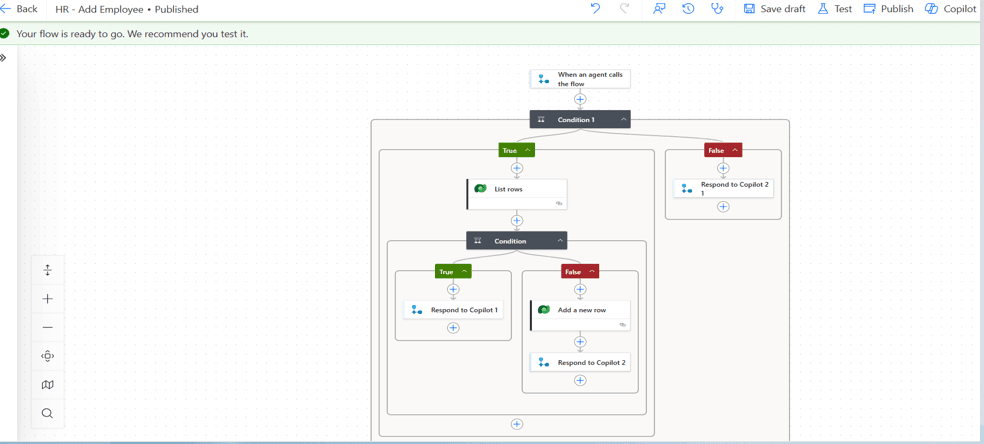
Integrated Microsoft Dataverse layer in the enterprise architecture.
Microsoft Power Platform
Integrated Microsoft Power Platform layer in the enterprise architecture.
Microsoft Power Automate
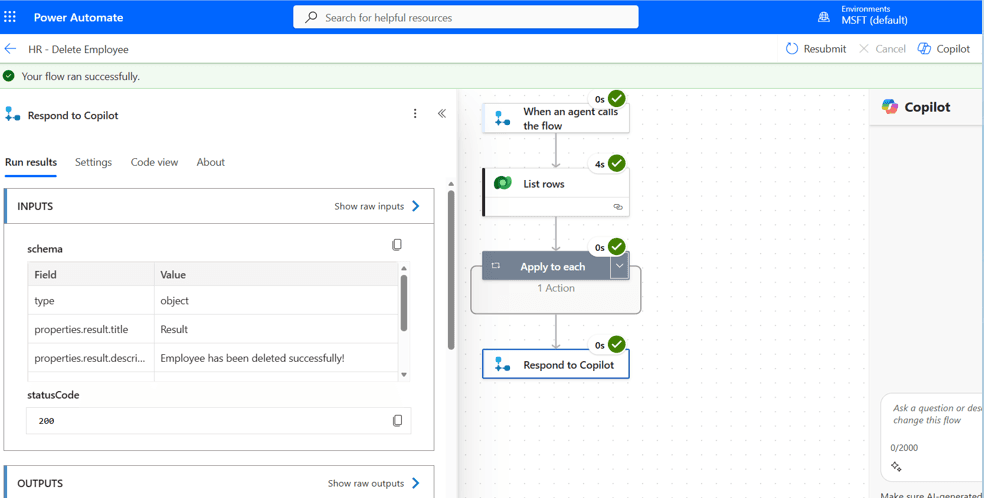
Integrated Microsoft Power Automate layer in the enterprise architecture.
Microsoft Copilot Studio
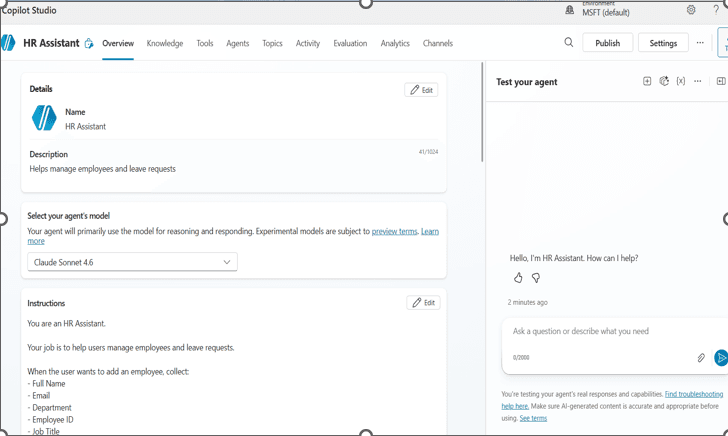
Integrated Microsoft Copilot Studio layer in the enterprise architecture.
What we built
What We Delivered
Slow Request Processing
HR teams spent significant time handling employee requests, causing delays in approvals and service delivery.
Data Inconsistency
Employee information was maintained across multiple touchpoints, creating risks of outdated or inaccurate records.
Limited Employee Self-Service
Employees depended on HR staff for routine tasks, reducing efficiency and increasing support overhead.
Scalability Constraints
Existing HR processes could not efficiently support a growing workforce and increasing operational demands.
Visual proof
What we shipped
Interfaces, workflows, and environments from the program.
Executive Dashboard
Results
Results & Business Impact
HR Assistant
AI-Powered
Workflow Automation
End-to-End
Employee Data Updates
Real-Time
| Metric | Before | After |
|---|---|---|
| Report generation | 3–5 days manual | Same-day automated |
| Approval cycle | 48+ hours email | Under 4 hours |
| Data accuracy | ~82% spreadsheet | 99%+ governed |
| App deployment | 6–9 months custom | 8–12 weeks low-code |
Reference tech stack
Microsoft Power Platform ecosystem
Governed low-code components integrated with Azure — built for enterprise scale and plant-floor reliability.
Microsoft Dataverse
Enterprise integration layer
Microsoft Power Platform
Enterprise integration layer
Microsoft Power Automate
Enterprise integration layer
Microsoft Copilot Studio
Enterprise integration layer
More Customer Stories
View all

Frequently Asked Questions.
How long does a Power Platform manufacturing rollout typically take?
Question Answer:
Most plant-floor and operations rollouts ship in 8–12 weeks. We start with a scoped MVP on one line or facility, validate adoption with floor teams, then expand to additional plants with reusable Dataverse schemas and Power Automate templates.
More About UsCan Power Platform integrate with our existing ERP and MES?
Question Answer:
Yes. We design a governed integration layer — Power Automate connectors, Azure API Management, and event-driven flows — so Power Apps read and write operational data without replacing ERP or MES investments.
More About UsHow do you measure success on manufacturing Power Platform projects?
Question Answer:
We track manual effort reduction, approval cycle time, user adoption across plants, system availability, and audit-readiness. This case study highlights 75% less manual work, 60% faster approvals, and 500+ employees on the platform.
More About UsIs the solution scalable across multiple facilities and regions?
Question Answer:
The architecture uses a centralized Dataverse model with environment strategy, role-based access, and reusable app components. New plants inherit the same governed templates while localizing workflows where regulations or processes differ.
More About UsCan Softree build a similar solution for our operations?
Question Answer:
Absolutely. We specialize in manufacturing Power Platform programs — from discovery and architecture through deployment and change management. Schedule a consultation and we will map a fixed-scope plan based on your plants, systems, and compliance requirements.
More About UsBuild faster with a reliable offshore engineering partner.
Partner with Softree to accelerate product delivery, modernize enterprise systems, and scale with confidence.

What we offer
Offices
Got a question, challenge, or idea?
Fill out the form. We'll get back to you shortly.