Introduction
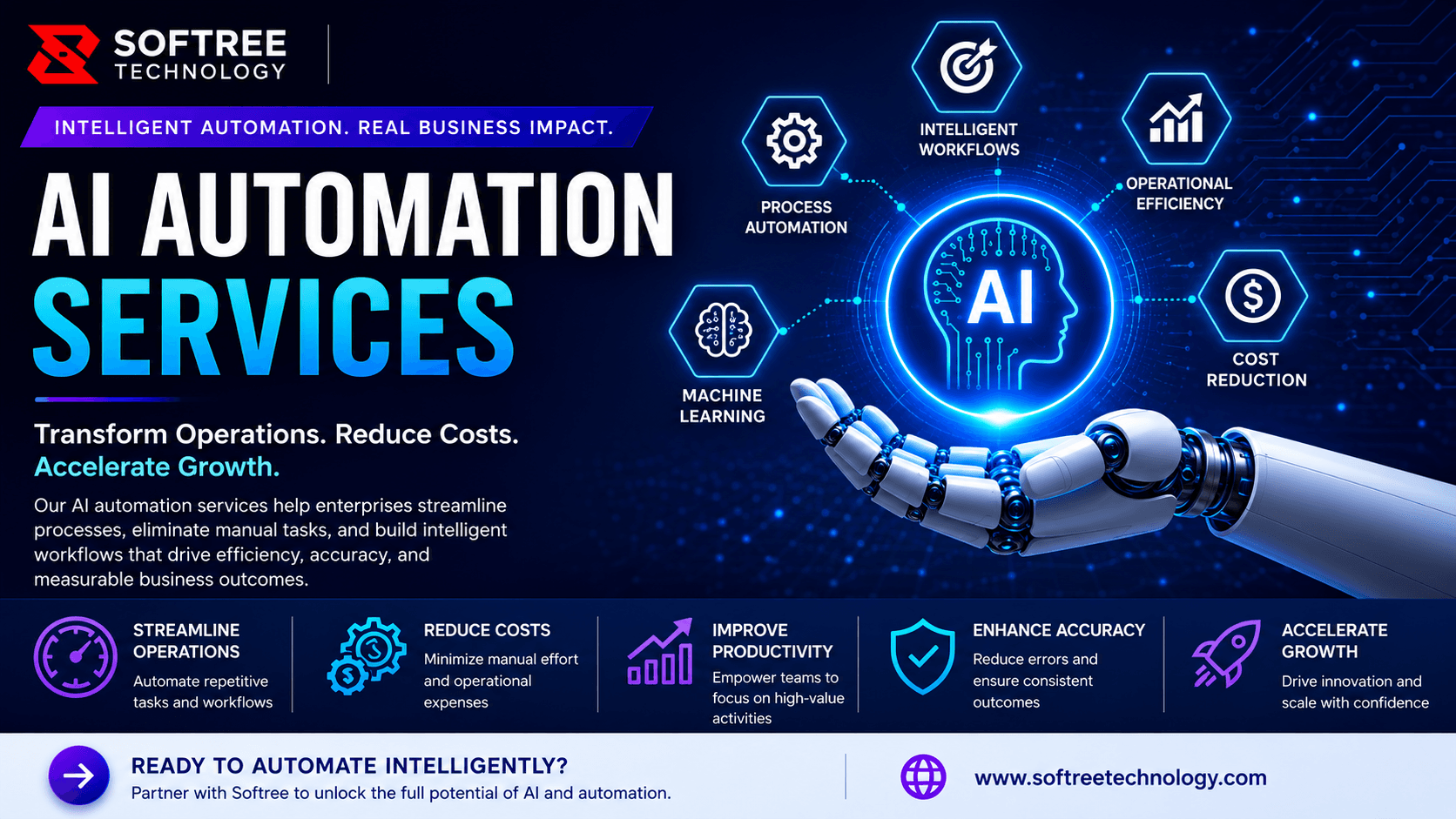
Artificial Intelligence has become a strategic business priority rather than a technology experiment. Enterprise leaders are looking beyond isolated AI pilots and focusing on how AI can improve operations, productivity, customer experience, decision-making, and long-term competitiveness. Enterprise AI Automation Consulting provides the structure needed to turn AI investments into measurable business outcomes.
What is Enterprise AI Automation Consulting?
Enterprise AI Automation Consulting is a strategic advisory and implementation discipline that helps organizations adopt AI responsibly and effectively. Rather than focusing only on tools, consulting focuses on business outcomes, operating models, governance, scalability, and transformation.
The objective is to align AI initiatives with business goals, improve operational efficiency, reduce costs, and create sustainable competitive advantages. AI consulting covers strategy development, opportunity assessment, roadmap creation, architecture design, governance, implementation planning, and adoption support.
Why is Enterprise AI Automation Consulting Important?
Many AI initiatives fail because organizations start with technology instead of business outcomes. Enterprises often face fragmented systems, poor data quality, inconsistent governance, skill gaps, and unclear ROI expectations.
AI consulting helps organizations avoid these challenges by providing a structured framework for adoption. It ensures investments are aligned with measurable objectives, risks are managed proactively, and AI initiatives can scale across departments.
How Does Enterprise AI Automation Consulting Work?
1. Discovery and Assessment – Evaluate business goals, processes, technology landscape, data maturity, and AI readiness.
2. Opportunity Identification – Identify high-value use cases with measurable business impact.
3. Strategy Development – Create an AI roadmap aligned with organizational priorities.
4. Governance Design – Define security, compliance, accountability, and responsible AI standards.
5. Architecture Planning – Design scalable AI, automation, analytics, and integration frameworks.
6. Implementation and Adoption – Deploy solutions and support organizational change.
7. Optimization – Measure outcomes and continuously improve performance.
Key Features and Components
• AI Strategy and Roadmap Development
• Intelligent Process Automation
• Data Governance and Modernization
• Enterprise Architecture Planning
• AI Operating Models
• Responsible AI Frameworks
• KPI and Performance Measurement
• Change Management and Adoption Programs
• Security and Compliance Controls
• Continuous Improvement Frameworks
Benefits & ROI
Operational Benefits:
• Faster workflows and approvals
• Reduced manual effort
• Increased employee productivity
• Better customer experiences
Financial Benefits:
• Lower operating costs
• Reduced process inefficiencies
• Improved resource utilization
• Faster return on investment
Strategic Benefits:
• Greater agility
• Better forecasting and planning
• Enhanced competitiveness
• Scalable transformation
Organizations that successfully implement AI often achieve measurable gains in productivity, decision quality, operational resilience, and customer satisfaction.
Enterprise Use Cases
Finance: Financial forecasting, fraud detection, invoice automation, reporting.
Human Resources: Recruitment automation, onboarding, workforce analytics.
Customer Service: Virtual assistants, intelligent routing, sentiment analysis.
Supply Chain: Demand forecasting, inventory optimization, logistics planning.
Manufacturing: Predictive maintenance, quality analytics, production optimization.
Healthcare: Scheduling, documentation, patient engagement, operational reporting.
IT Operations: Service desk automation, monitoring, incident management.
Sales & Marketing: Lead scoring, personalization, forecasting, campaign optimization.
Best Practices
• Start with business outcomes.
• Build governance from day one.
• Prioritize high-impact use cases.
• Modernize data foundations.
• Design for scalability.
• Invest in user adoption.
• Maintain human oversight.
• Continuously monitor and optimize.
• Establish executive sponsorship.
• Measure business outcomes, not just technical metrics.
Common Mistakes to Avoid
• Implementing AI without a roadmap.
• Ignoring data quality issues.
• Underestimating governance requirements.
• Focusing only on technology.
• Scaling too quickly without validation.
• Neglecting employee adoption.
• Failing to define KPIs.
• Treating AI as a one-time project instead of an ongoing capability.
AI Maturity Model
Level 1 – Awareness: Understanding AI opportunities.
Level 2 – Experimentation: Pilot projects and proofs of concept.
Level 3 – Operational Adoption: AI deployed within specific functions.
Level 4 – Enterprise Scale: AI integrated across departments with governance.
Level 5 – Intelligent Enterprise: AI embedded in operations, decisions, and innovation.
Organizations should assess their maturity level and create a roadmap for progression.
Key Takeaways
• AI success requires strategy and governance.
• Data quality is foundational.
• Intelligent automation delivers measurable value.
• Scalability must be planned early.
• AI should support business objectives.
• Continuous optimization is essential for long-term success.
Ready to Accelerate Your AI Automation Transformation?
Enterprise AI success requires more than technology implementation. It requires the right strategy, governance framework, automation roadmap, and execution approach.
At Softree, we help organizations identify high-value AI opportunities, modernize business processes, implement intelligent automation solutions, and scale AI initiatives across the enterprise.
Our expertise includes:
• Enterprise AI Strategy & Roadmap Development
• Intelligent Automation & Workflow Modernization
• Microsoft Power Platform & Copilot Solutions
• AI Governance & Security Frameworks
• Cloud & Data Modernization
• Enterprise Architecture & Digital Transformation
Whether you're exploring AI adoption, launching automation initiatives, or scaling enterprise-wide AI programs, our team can help turn AI investments into measurable business outcomes.
Conclusion
Enterprise AI Automation Consulting helps organizations move from experimentation to enterprise-wide transformation. The most successful organizations are not those investing the most in AI, but those implementing AI strategically, responsibly, and at scale.
By combining governance, intelligent automation, modern architecture, and business alignment, enterprises can improve efficiency, accelerate innovation, and create sustainable competitive advantages.
Softree helps organizations build scalable AI strategies that deliver measurable business outcomes and long-term value.
Website: www.softreetechnology.com