Introduction
A Website Is No Longer Just a Digital Brochure
Your website is often the first interaction customers have with your business. Yet many organizations still rely on legacy websites that are slow, difficult to maintain, insecure, and unable to support today's customer expectations.
An outdated website doesn't just hurt your brand—it impacts SEO rankings, conversion rates, operational efficiency, and long-term scalability.
In today's AI-driven digital landscape, website modernization has become a business necessity rather than a technology upgrade.
What You'll Learn
In this guide, you'll discover:
- What website modernization really means
- Why businesses are investing in modernization
- Key technologies involved
- Benefits and business impact
- Common implementation strategies
- Best practices and mistakes to avoid
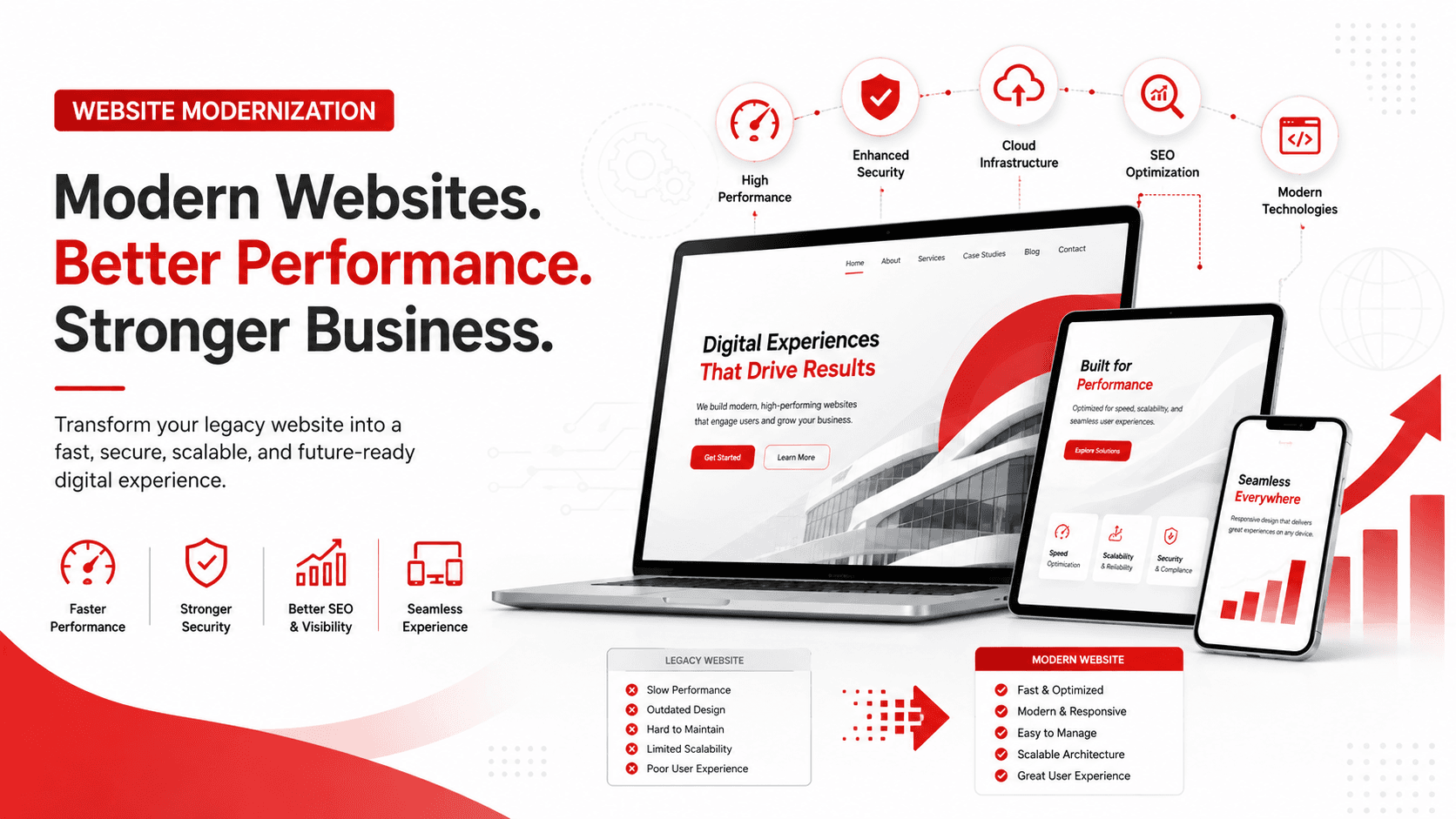
Website modernization is the process of upgrading a legacy website using modern technologies, cloud infrastructure, responsive design, AI capabilities, and improved security to deliver better user experiences, improve performance, and support long-term business growth.
Table of Contents
- What is Website Modernization?
- Why Website Modernization Matters
- How Website Modernization Works
- Key Components
- Benefits
- Common Use Cases
- Best Practices
- Common Mistakes
- Modern vs Legacy Websites
- Frequently Asked Questions
- Key Takeaways
- Conclusion
What is Website Modernization?
Website modernization is the process of transforming an existing website into a modern, scalable, secure, and high-performing digital platform.
Unlike a simple redesign, modernization focuses on improving the underlying architecture, technology stack, user experience, content management, security, accessibility, and performance.
Modern websites are designed to deliver seamless experiences across desktop, mobile, and emerging digital channels while supporting rapid business growth.
Overview
A modernization initiative may include:
- UI/UX redesign
- Responsive development
- Headless CMS implementation
- Cloud deployment
- API integration
- AI-powered features
- SEO optimization
- Performance optimization
- Accessibility improvements
- Analytics integration
Why is Website Modernization Important?
Better Customer Experience
Modern users expect websites to load in seconds, work flawlessly on every device, and provide intuitive navigation.
Improved Business Performance
Modern websites improve:
- Lead generation
- Customer engagement
- Conversion rates
- Organic search visibility
- Brand credibility
Stronger Security
Legacy frameworks often contain unsupported libraries and security vulnerabilities.
Modern platforms receive continuous updates and stronger security controls.
Easier Content Management
Headless CMS platforms allow marketing teams to publish content without developer involvement.
How Does Website Modernization Work?
Step 1: Website Assessment
Evaluate:
- Current architecture
- Performance
- Security
- SEO
- Accessibility
- Technical debt
Step 2: Modern Architecture Design
Choose technologies such as:
- Next.js
- React
- Headless CMS
- Cloud hosting
- API-first architecture
Step 3: Migration & Optimization
Modernize:
- Content
- Images
- Navigation
- Integrations
- Performance
- Analytics
Diagram / Visual
Legacy Website │Website Audit │Architecture Planning │UI/UX Redesign │Development │CMS Migration │Testing │Deployment │Continuous Optimization
Key Features / Components
Modern Frontend
- Responsive UI
- Component-based architecture
- Fast page rendering
- Interactive experiences
Headless CMS
Enables content teams to manage websites independently while developers focus on functionality.
Popular platforms include:
- Sanity
- Contentful
- Strapi
Performance Optimization
Key improvements include:
- Image optimization
- Code splitting
- Lazy loading
- Edge caching
- CDN integration
Benefits of Website Modernization
Improved Website Speed
Modern frameworks significantly reduce loading times.
Better SEO
Faster websites with clean architecture achieve better search engine rankings.
Increased Conversions
Improved UX leads to higher engagement and more completed actions.
Enhanced Security
Modern authentication, HTTPS, secure APIs, and cloud infrastructure reduce security risks.
Future Scalability
Modern architectures make it easier to add new features without rebuilding the platform.
Common Use Cases
Corporate Website Modernization
Refresh outdated business websites with responsive design and modern branding.
E-commerce Transformation
Upgrade legacy online stores with faster checkout experiences and scalable commerce platforms.
Enterprise Portal Modernization
Improve internal portals with modern authentication, dashboards, AI search, and integrations.
- Start with a comprehensive website audit.
- Prioritize performance, accessibility, and SEO from the beginning.
- Adopt a headless, API-first architecture for flexibility.
- Optimize Core Web Vitals.
- Ensure mobile-first responsive design.
- Implement strong analytics and monitoring.
- Plan for continuous updates rather than one-time redesigns.
Common Mistakes to Avoid
- Treating modernization as only a visual redesign.
- Migrating outdated content without reviewing its relevance.
- Ignoring SEO during migration.
- Choosing technologies that don't align with long-term business goals.
- Neglecting accessibility and performance testing.
Conclusion
Website modernization is an investment in your organization's digital future. By replacing legacy technologies with modern frameworks, improving performance, strengthening security, and delivering exceptional user experiences, businesses can increase customer engagement, improve operational efficiency, and remain competitive in an increasingly digital marketplace.
Whether you're planning a complete platform migration or incremental improvements, a well-executed modernization strategy provides the foundation for sustainable growth, innovation, and long-term success.
At Softree Technology, we specialize in helping organizations modernize legacy websites with cutting-edge technologies such as Next.js, React, Headless CMS, cloud-native architectures, AI-powered solutions, and performance-driven development. Our team delivers secure, scalable, SEO-optimized, and user-centric digital experiences tailored to your business goals.
Ready to modernize your website? Visit https://www.softreetechnology.com/ to learn more about our website modernization services or connect with our experts to discuss your digital transformation journey.