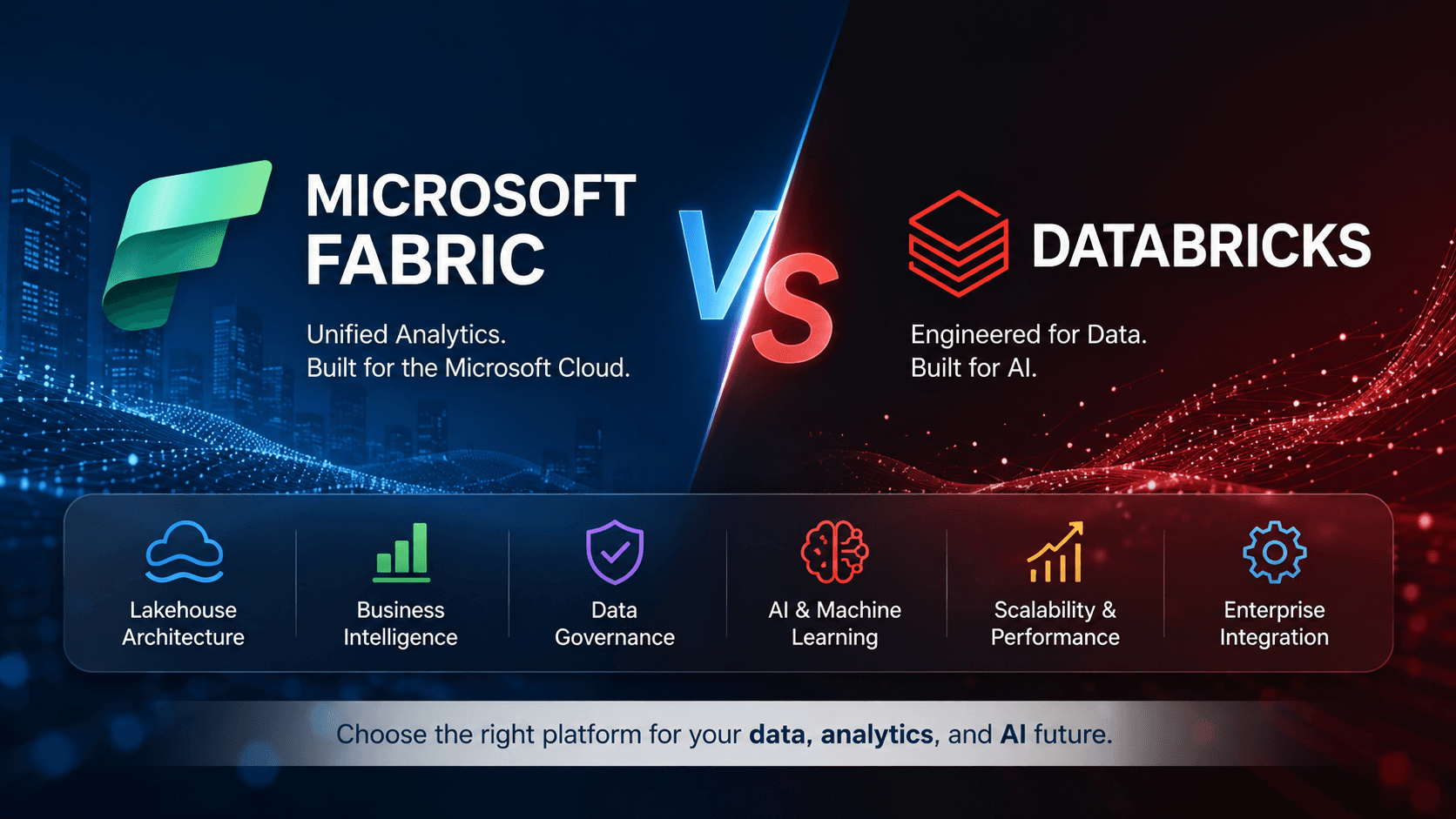
Introduction
Choosing between Microsoft Fabric and Databricks is one of the most important decisions organizations make when modernizing their data and analytics platforms. Both solutions support lakehouse architecture, AI, and enterprise analytics, but they differ in integration, governance, and the workloads they are designed to handle. Making the right choice can improve operational efficiency, strengthen governance, and maximize long-term business value.
In this guide, you'll learn:
- The core differences between Microsoft Fabric and Databricks
- Which platform is better for different business scenarios
- Key features, benefits, and enterprise use cases
- Best practices for selecting the right platform
Quick Answer
Microsoft Fabric is the preferred choice for organizations already invested in the Microsoft ecosystem, offering a unified analytics experience with seamless integration across Microsoft services. Databricks is better suited for enterprises that require advanced data engineering, machine learning, and AI capabilities.
Key highlights:
- Microsoft Fabric excels in Microsoft-centric environments.
- Databricks is designed for complex engineering and AI workloads.
- The right choice depends on business goals, governance needs, and technical maturity.
What is Microsoft Fabric vs Databricks?
Microsoft Fabric is Microsoft's unified SaaS analytics platform that combines data engineering, business intelligence, analytics, and AI into a single integrated environment. Databricks is a lakehouse platform built for scalable data engineering, machine learning, and artificial intelligence workloads.
Both platforms enable organizations to modernize their data infrastructure through:
- Enterprise-scale analytics
- Lakehouse architecture
- AI and machine learning capabilities
- Data governance and security
- Modern data engineering workflows
Why is Microsoft Fabric vs Databricks Important?
Selecting the right analytics platform has a direct impact on an organization's ability to manage data efficiently, support AI initiatives, and control operational costs. A well-aligned platform enables better collaboration, governance, and faster decision-making.
Choosing the right solution helps organizations:
- Improve governance and compliance
- Increase engineering productivity
- Reduce total cost of ownership
- Accelerate analytics and reporting
- Support long-term AI initiatives
How Does It Work?
Choosing between Microsoft Fabric and Databricks requires evaluating both business and technical requirements. Organizations should assess their existing technology landscape before selecting a platform and planning implementation.
A typical evaluation process includes:
- Assess business goals and current Microsoft ecosystem investments.
- Evaluate governance, engineering, and AI requirements.
- Validate workloads, optimize performance, and establish operational governance.
A comparison diagram or architecture flow can be included in this section.
Key Features / Components
Although both platforms provide enterprise analytics capabilities, they offer different strengths depending on organizational requirements.
Microsoft Fabric
- OneLake for unified data storage
- Native Power BI integration
- Microsoft Purview for governance
- Copilot-powered AI experiences
Databricks
- Delta Lake architecture
- Business intelligence through integrations
- Unity Catalog for governance
- Mosaic AI and MLflow for AI development
Benefits
Both Microsoft Fabric and Databricks help organizations modernize analytics and accelerate digital transformation. The right platform depends on business priorities and existing technology investments.
Microsoft Fabric benefits
- Unified analytics platform
- Deep Microsoft ecosystem integration
- Simplified administration
Databricks benefits
- Advanced data engineering capabilities
- Scalable AI and machine learning
- High-performance analytics workloads
Common Use Cases
Both platforms support a wide range of enterprise analytics scenarios across industries and business functions.
Common use cases include:
- Financial reporting
- Healthcare analytics
- Manufacturing IoT
- Retail insights
- Customer 360
- Predictive maintenance
Best Practices
A successful implementation requires careful planning, governance, and continuous optimization. Organizations should focus on both technical and business outcomes throughout the adoption journey.
Recommended best practices include:
- Define measurable business KPIs
- Establish governance policies early
- Automate data pipelines where possible
- Continuously monitor platform costs
- Train business and technical users
- Adopt a phased migration strategy
Common Mistakes to Avoid
While the uploaded document does not provide a dedicated list of common mistakes, organizations should ensure that platform evaluation aligns with business objectives and governance requirements before implementation.
Key Takeaways
When choosing between Microsoft Fabric and Databricks, organizations should focus on long-term business value rather than individual features.
- Microsoft Fabric is ideal for Microsoft-first organizations.
- Databricks is better suited for advanced AI and engineering workloads.
- Align platform selection with governance, business goals, and technical maturity.
- Consider future modernization and AI strategies before investing.
Conclusion
Microsoft Fabric and Databricks are both powerful enterprise analytics platforms, each designed to address different organizational needs. The right choice depends on your existing technology ecosystem, governance requirements, engineering capabilities, and long-term AI strategy. By carefully evaluating these factors, organizations can build a scalable, future-ready data platform that delivers measurable business outcomes.
Softree Technology helps enterprises evaluate, implement, migrate, and optimize Microsoft Fabric and Databricks solutions. From architecture design and governance to data migration and managed services, our experts help organizations accelerate digital transformation and maximize the value of their analytics investments.