Hospital Stock Management & Inventory Optimization
Microsoft Fabric, Power BI, data engineering, inventory analytics, and demand forecasting are the primary focus.
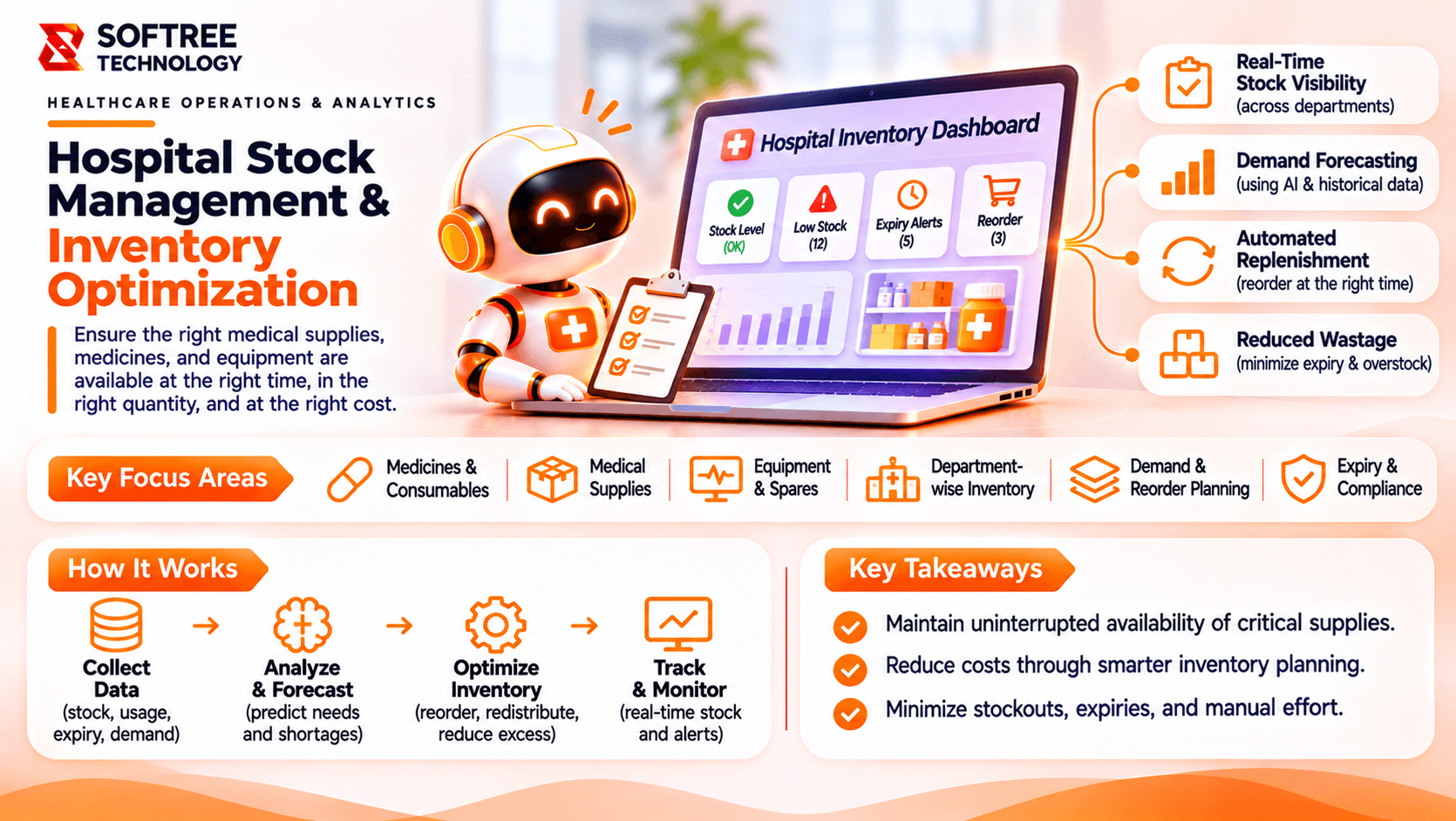
Business Process Challenges
A multi-specialty hospital network manages medicines, medical consumables, and critical supplies across multiple hospitals, pharmacies, medical stores, operating theatres, and clinical departments. However, inventory information is distributed across Hospital Management Systems (HMS), pharmacy applications, ERP platforms, SQL Server databases, and Excel spreadsheets.
This fragmented environment makes it difficult for hospital management to maintain a consolidated view of stock availability, consumption patterns, procurement activities, and inventory risks.
Key challenges included:
- Medicine stockouts: Critical medicines and medical supplies may become unavailable when required for patient treatment.
- Expired inventory: Medicines can expire before consumption, resulting in financial losses and wastage.
- Overstocking: Excess inventory accumulates because future consumption is difficult to estimate accurately.
- Limited inventory visibility: Management lacks a unified view of stock across hospitals and departments.
- Inefficient procurement: Reactive purchasing leads to emergency orders, higher costs, and delayed replenishment.
- Unpredictable consumption: Demand changes with patient admissions, seasonal diseases, and treatment patterns.
- Supplier delivery issues: Delayed deliveries can disrupt medicine availability.
- Batch and expiry tracking: Monitoring batches, expiry dates, and recalls across multiple storage locations is difficult.
- Inventory inconsistencies: Differences between physical stock and system records affect reporting accuracy.
- Poor stock distribution: One hospital may have excess stock while another experiences shortages.
Our Strategic Approach
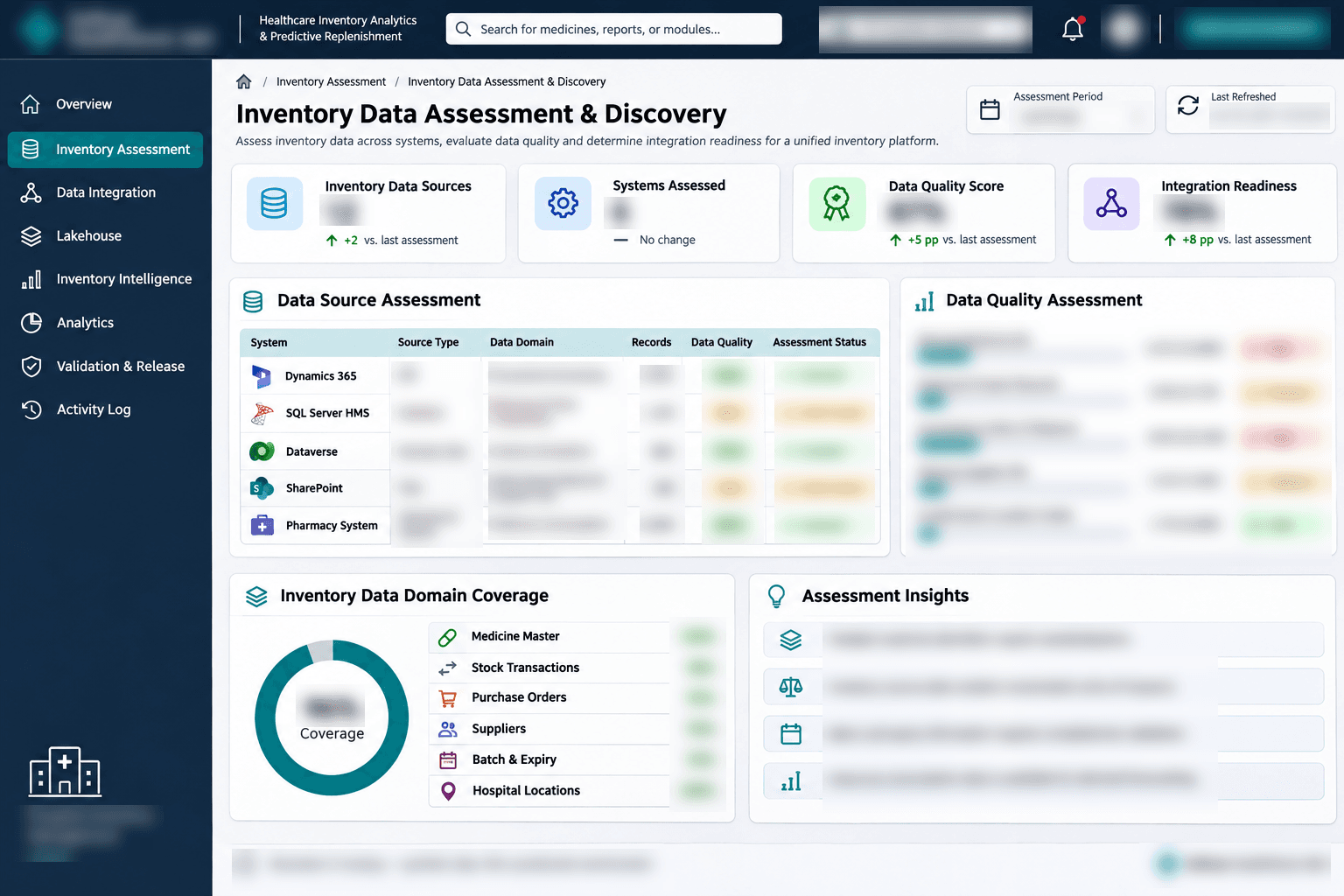
Softree designed a centralized healthcare inventory analytics architecture using Microsoft Dynamics 365, Microsoft Fabric, Power BI, Dataverse, SQL Server, and SharePoint.
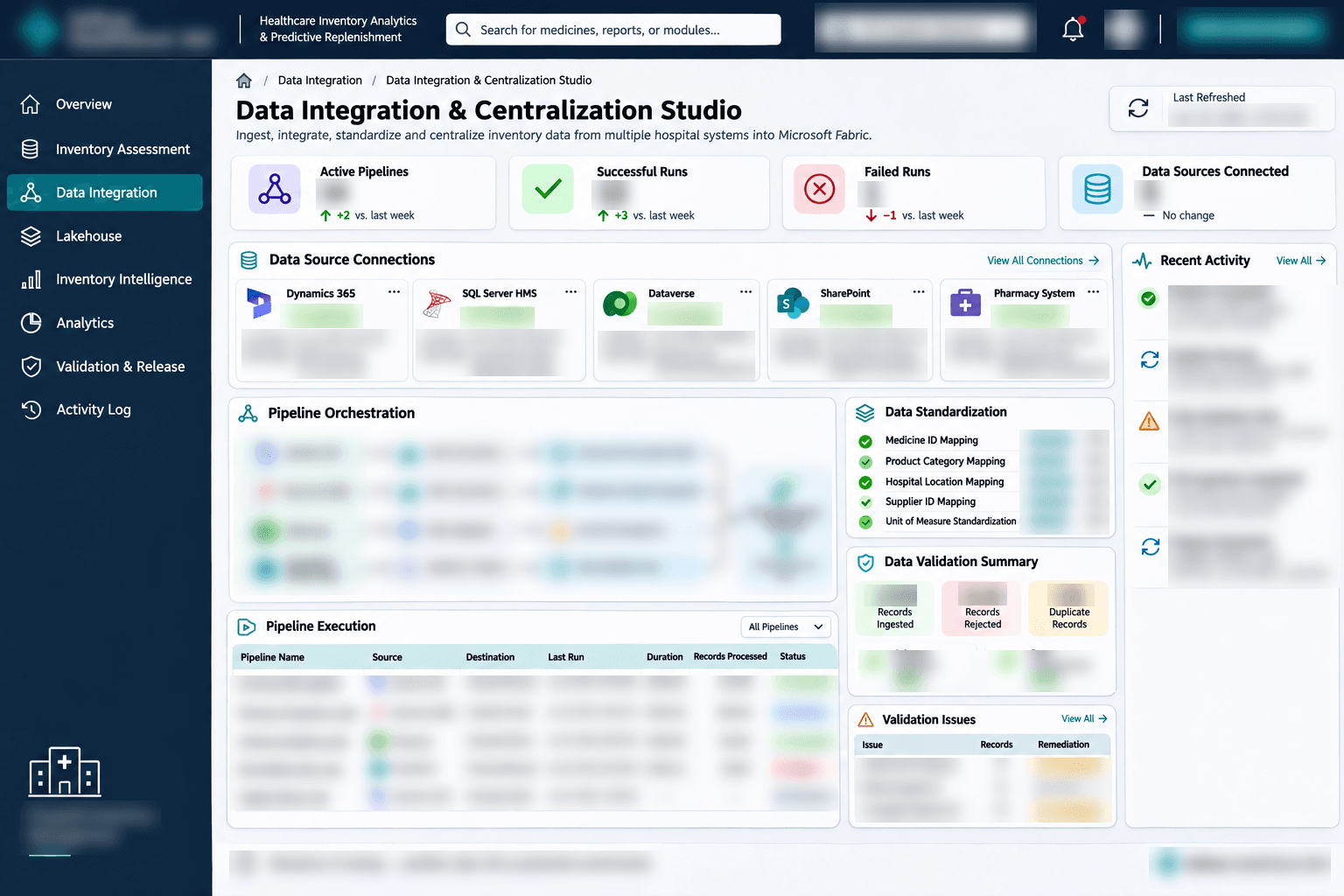
The approach brings inventory and procurement information from multiple operational systems into Microsoft Fabric, where the data can be standardized, transformed, and organized for analytics and forecasting.
1. Data Integration and Centralization
Softree's proposed integration approach connects:
- Dynamics 365 for procurement, purchase orders, suppliers, and inventory transactions.
- SQL Server for existing HMS, pharmacy, and historical transactional data.
- Dataverse for structured operational information and inventory exception workflows.
- SharePoint for Excel inventory files, supplier documents, policies, and reconciliation records.
Microsoft Fabric Data Factory pipelines and dataflows support data ingestion and orchestration.
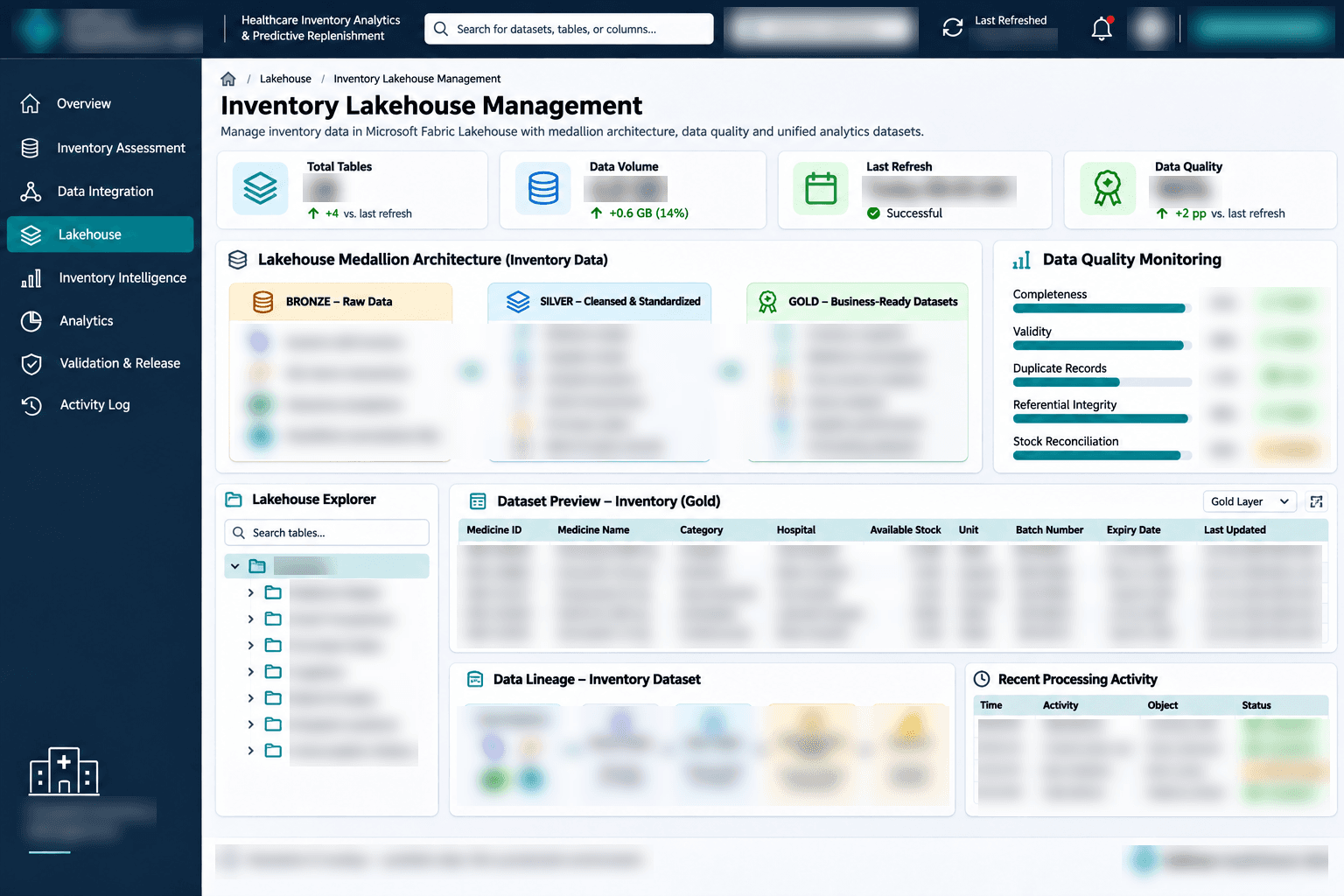
2. Centralized Inventory Lakehouse
Softree designed a Bronze, Silver, and Gold architecture in Microsoft Fabric OneLake.
- Bronze: Stores raw inventory and transactional data from connected sources.
- Silver: Cleans, standardizes, and integrates medicine IDs, product categories, hospital locations, supplier IDs, and units of measurement.
- Gold: Contains curated datasets for inventory, medicine consumption, procurement, supplier performance, expiry tracking, and forecasting.
SQL and PySpark support data transformation, reconciliation, and processing.
3. Demand Forecasting and Inventory Intelligence
The architecture uses historical medicine consumption, seasonal trends, department activity, and patient volume where available to support demand forecasting.
It is designed to identify:
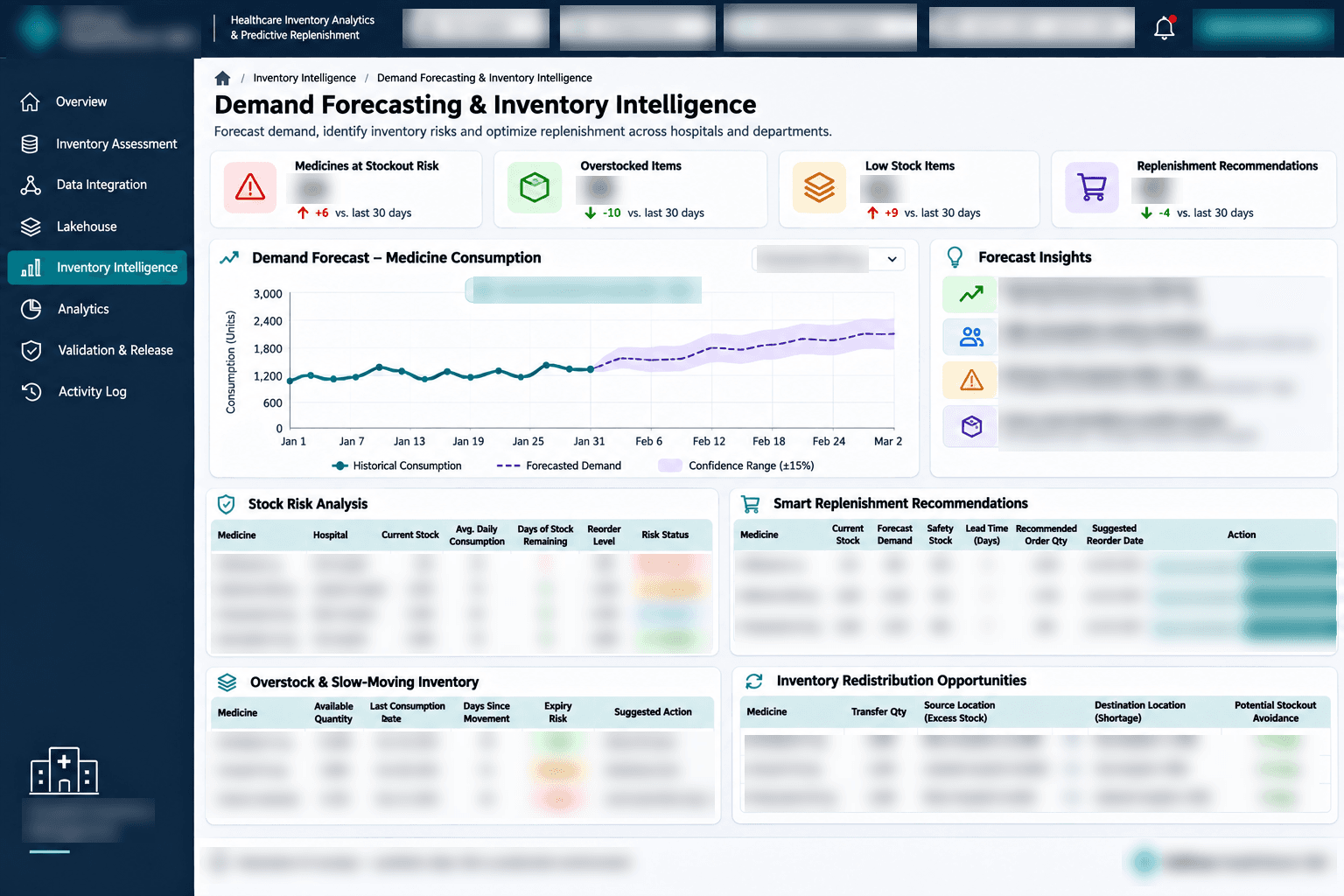
- Medicines at risk of stockouts.
- Excess inventory and slow-moving items.
- Upcoming expiry risks.
- Replenishment requirements based on configurable lead times, safety stock, and reorder thresholds.
- Potential opportunities to redistribute stock between hospitals.
Python supports forecasting and inventory analytics.
4. Power BI Inventory Analytics
Softree designed a Power BI dashboard approach for hospital management, pharmacists, procurement teams, and inventory managers.
The dashboards cover:
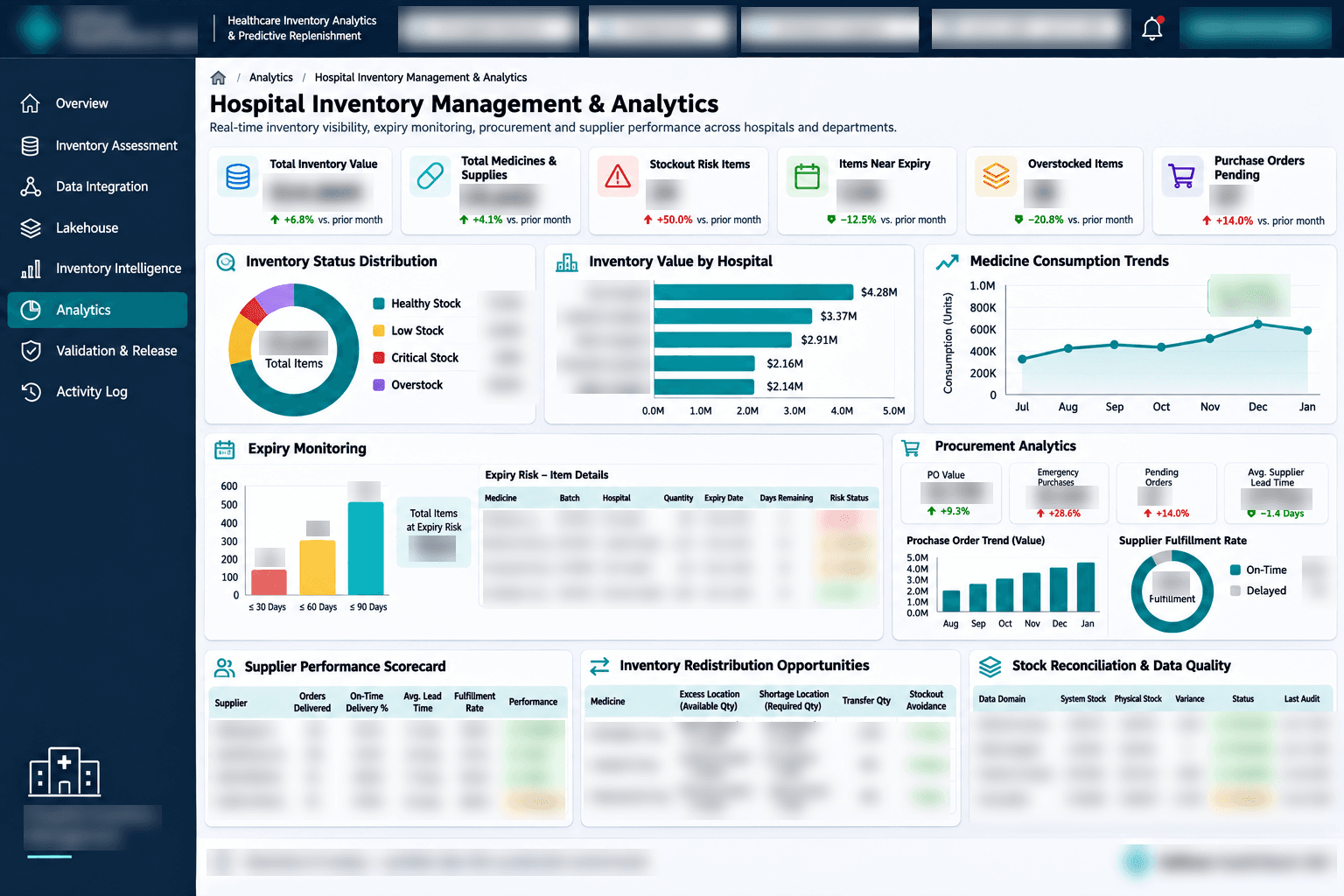
- Inventory availability across hospitals and departments.
- Stockout risk monitoring.
- Batch and expiry tracking.
- Medicine consumption and demand forecasting.
- Procurement and purchase order analysis.
- Supplier delivery performance.
- Stock transfers and redistribution.
- Inventory reconciliation and data quality.
5. Validation, Security, and Deployment
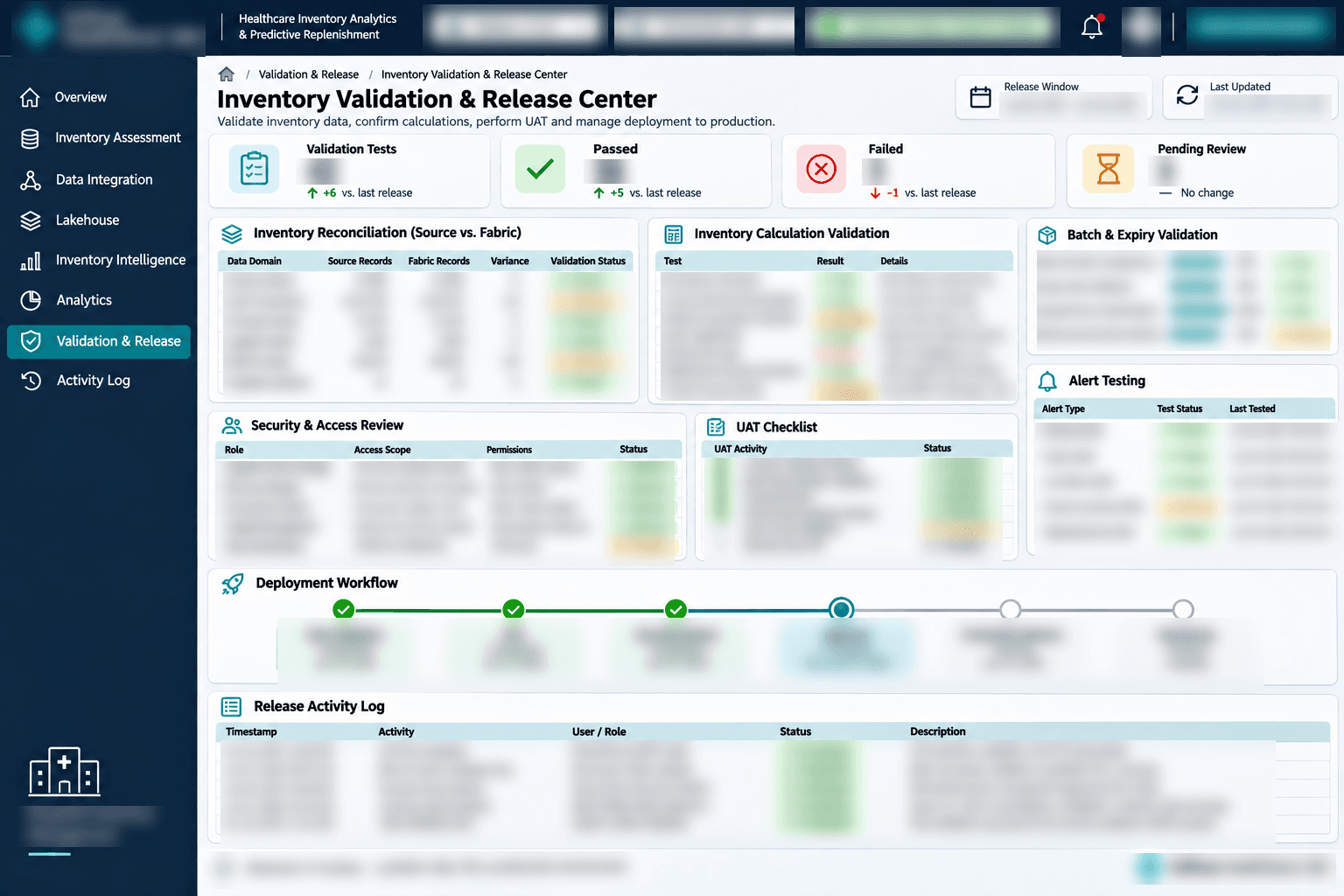
The proposed implementation includes inventory quantity validation against source systems, reconciliation of stock balances, forecasting validation, expiry and stockout alert testing, user acceptance testing, and role-based access controls.
Monitoring and governance help maintain data quality and support ongoing inventory reporting.
Our Engineering & Delivery Process
Our structured project delivery approach takes you from discovery and planning to development, testing, and deployment, ensuring quality, transparency, and predictable outcomes at every stage.
Discovery & Architecture
Deep-dive technical audit of existing systems, security baselines, API mapping, and comprehensive cloud target blueprinting.
UX & System Prototyping
Role-based user journeys, wireframing, high-fidelity clickable Figma prototypes, and API contract specifications prior to build.
Agile Sprint Engineering
Modular development sprints delivering clean, shippable code with automated CI/CD pipelines and continuous testing.
QA & Security Hardening
End-to-end regression suites, cross-device verification, load stress audits, and penetration testing for enterprise resilience.
Production Launch & Scale
Zero-downtime blue-green production deployment, real-time telemetry, administrator training runbooks, and ongoing SLA support.
Explore the Solution Through visuals
What changed for the client.
The proposed inventory analytics platform is designed to give hospital management a unified view of medicines and medical supplies across multiple locations.
By integrating operational data and applying forecasting and inventory intelligence, the architecture aims to support:
- Centralized inventory visibility across hospitals, pharmacies, and departments.
- Improved medicine and medical supply availability.
- Earlier identification of critical stockout risks.
- Better monitoring of expired and slow-moving inventory.
- More informed procurement and replenishment planning.
- Improved stock utilization and redistribution between locations.
- Better visibility into supplier delivery performance.
- More accurate inventory reconciliation and reporting.
- Faster inventory-related decision-making.
The platform establishes a foundation for more connected, data-driven healthcare inventory management, with opportunities to expand forecasting, procurement intelligence, and operational reporting as additional data becomes available.
The numbers behind the rollout.
The full integration layer.
Other engagements worth a look.
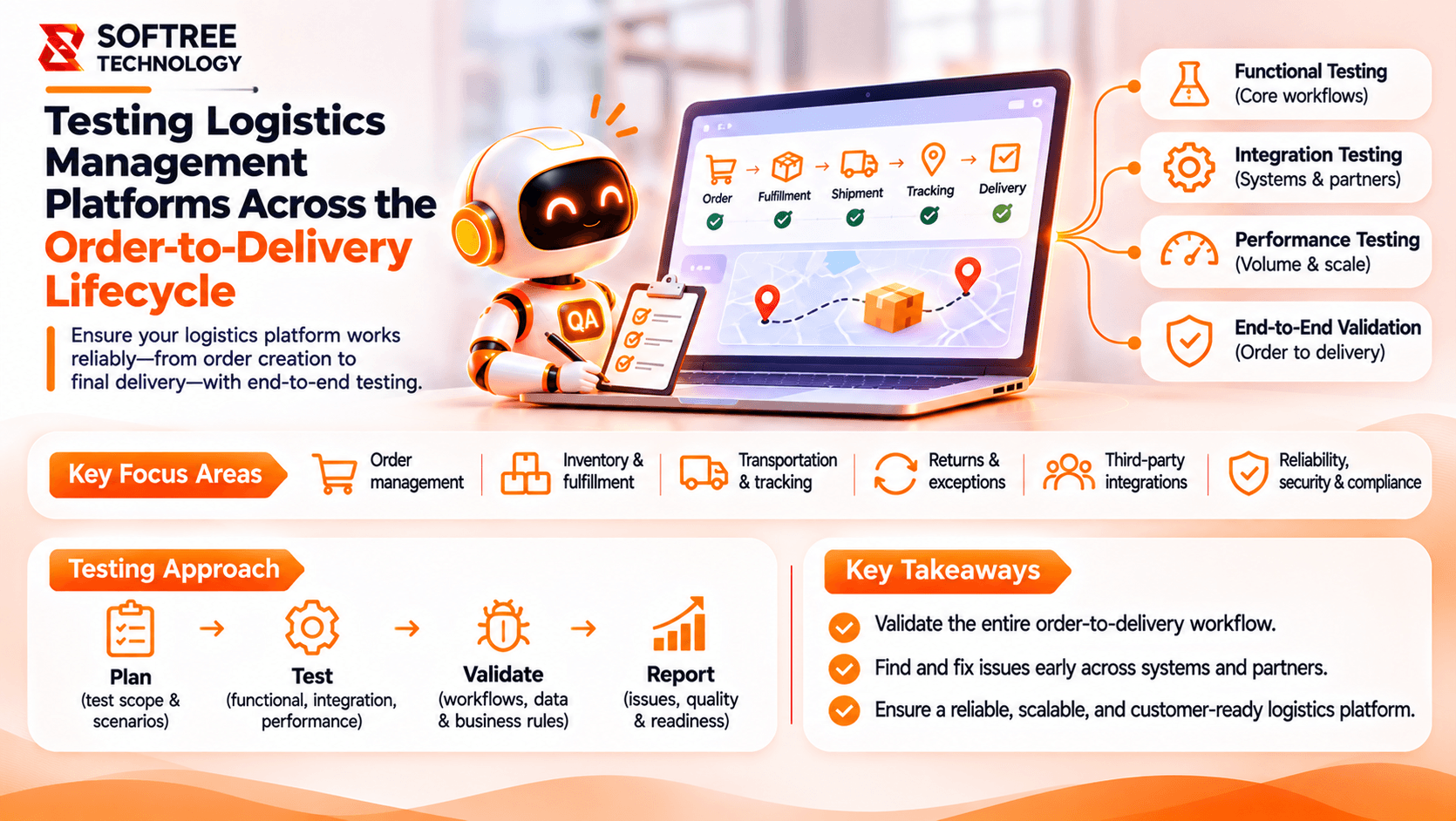
Testing Logistics Management Platforms Across the Order-to-Delivery Lifecycle
For fictional Northstar Freight Systems, an AI-assisted QA blueprint targets a 30–45% reduction in logistics regression testing time.
Read case study→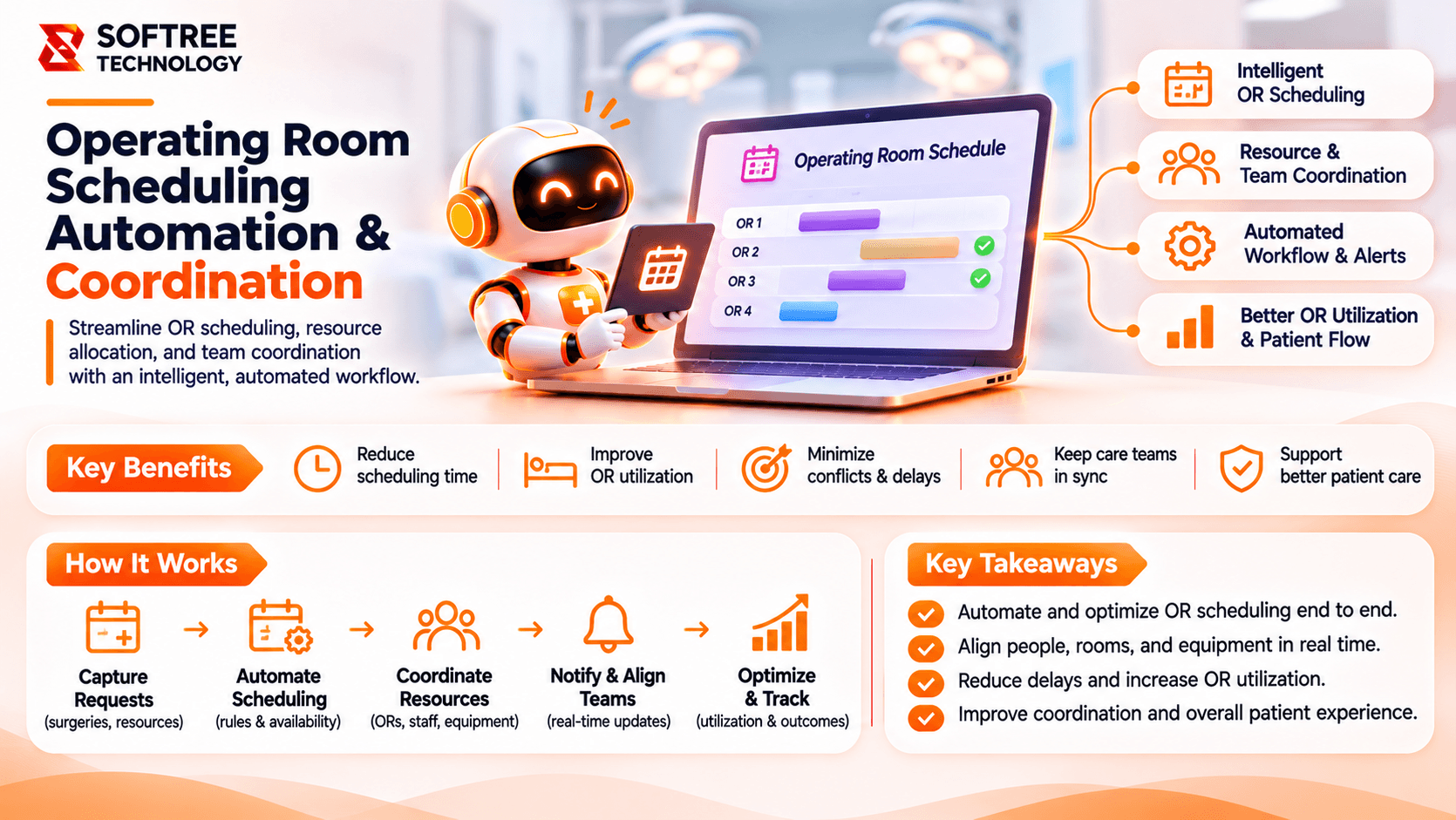
Operating Room Scheduling Automation & Coordination
A Dubai hospital explores AI-powered operating room scheduling to identify resource conflicts, coordinate surgical teams, and improve operational visibility.
Read case study→
Proof Of Delivery & Logistics Dispute Resolution Agent
Discover how an AI-powered logistics agent uses Amazon Bedrock and RAG to organize delivery evidence, detect documentation gaps, and streamline dispute resolution.
Read case study→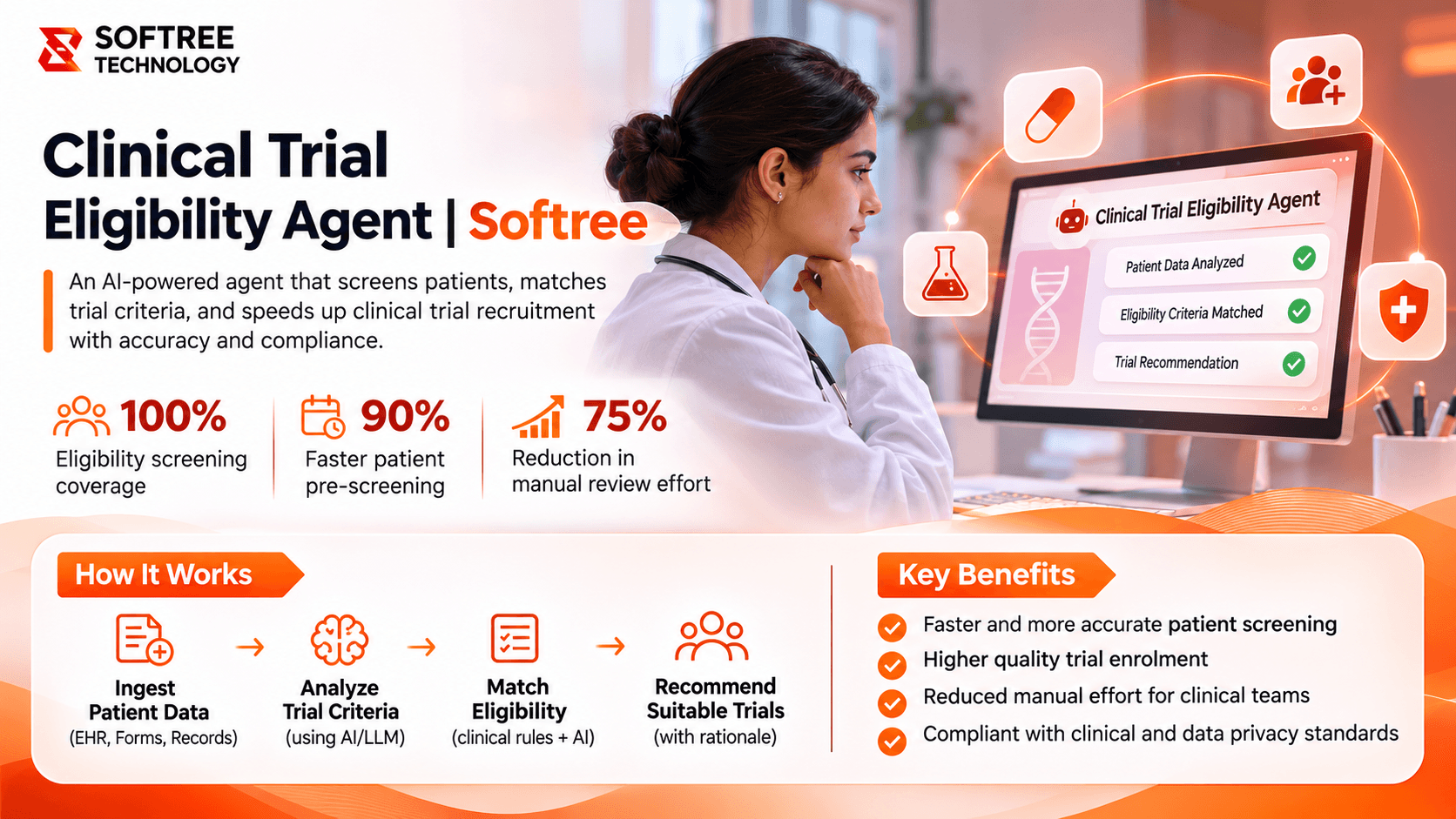
Clinical Trial Recruitment & Patient Eligibility Screening
AI clinical trial eligibility agent uses Amazon Bedrock and RAG to organize authorized patient screening and prepare evidence-linked summaries for research teams.
Read case study→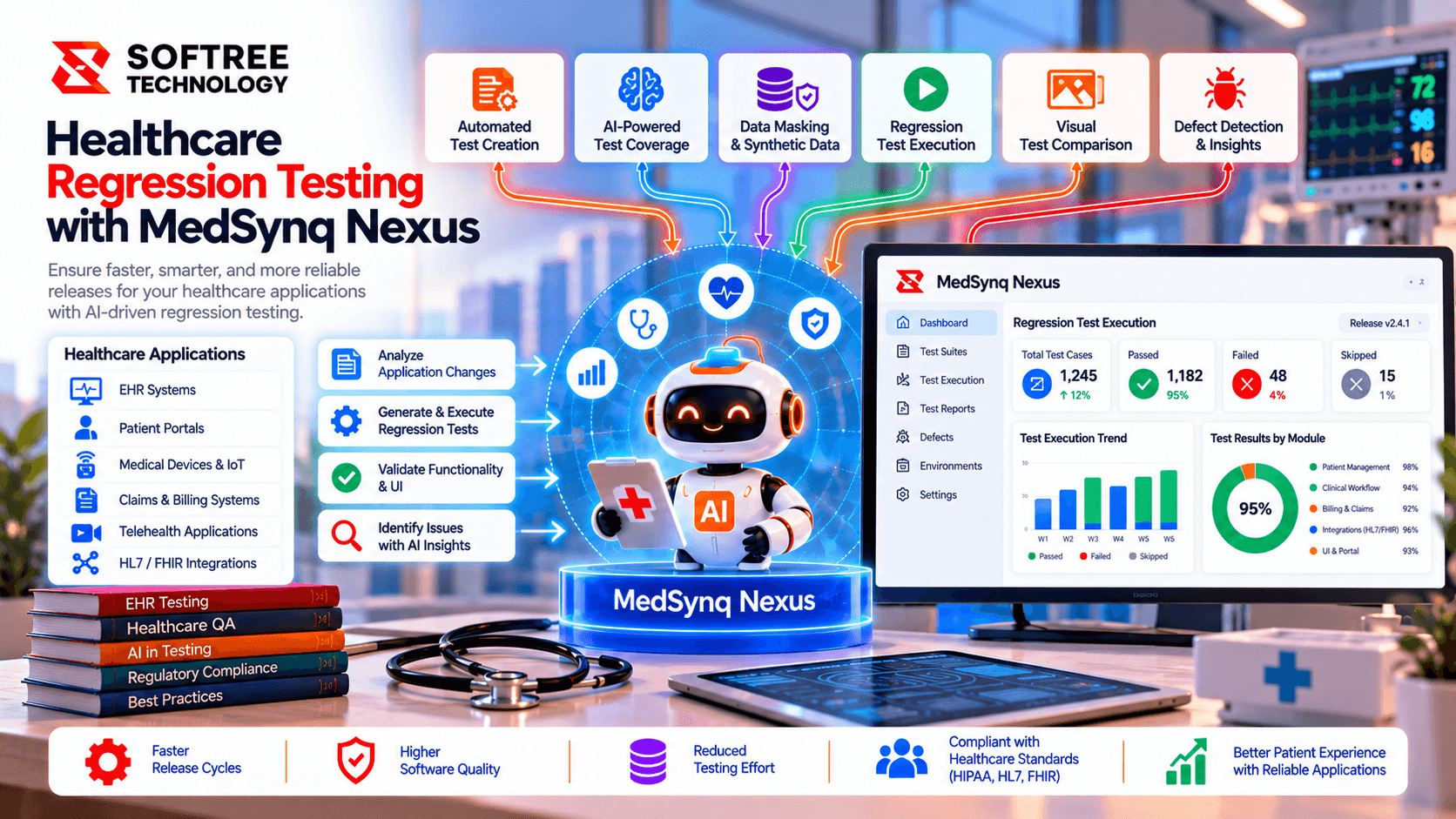
Healthcare Regression Testing with MedSynq Nexus
MedSynq Nexus uses AI-assisted impact analysis to prioritize healthcare regression tests, targeting up to 60% shorter regression cycles in eligible scenarios.
Read case study→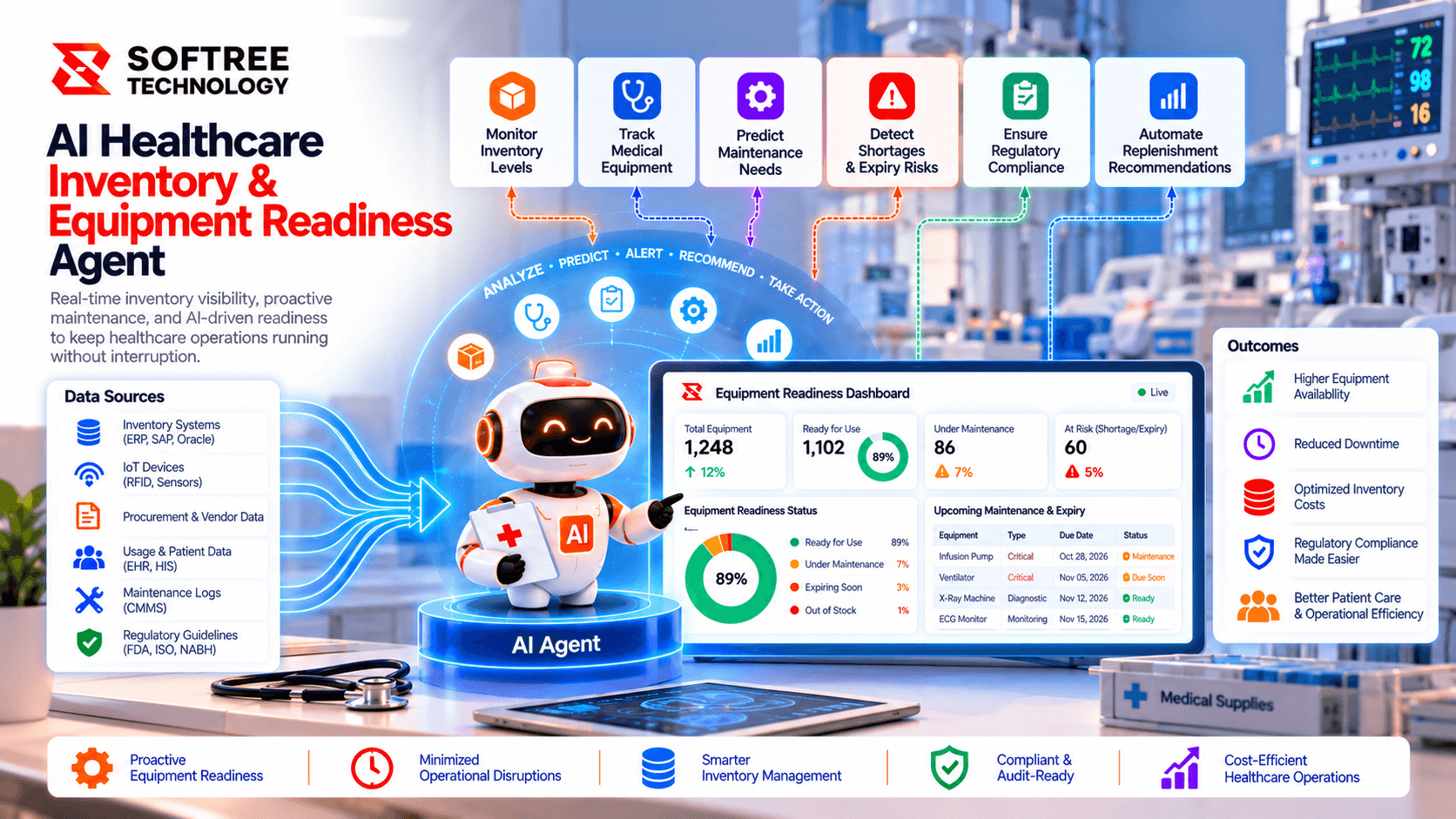
AI Healthcare Inventory & Equipment Readiness Agent
Softree designed an AI healthcare agent to monitor inventory, flag expiry risks, assess equipment readiness, and coordinate replenishment across hospital departments.
Read case study→Frequently asked questions.
Build faster with a reliable offshore engineering partner.
Partner with Softree to accelerate product delivery, modernize enterprise systems, and scale with confidence.

What we offer
Offices
Bengaluru
11th Floor, Prestige Tech Park, Platina 2 · Outer Ring Rd, Kadubeesanahalli · Bengaluru, Karnataka 560087, India
Cuttack
PLOT B6-1628, SECTOR-10, CDA · Cuttack, Odisha 753014 · India
San Francisco
San Francisco, CA 94108 · United States
Got a question, challenge, or idea?
Fill out the form or pick a time on our scheduler.
30-min discovery call
Same Calendly as our booking page · instant invite