Enterprise Application Modernization: Strategy, Benefits & Microsoft Solutions
Learn how Enterprise Application Modernization using Microsoft Azure, Power Platform, and AI improves performance, security, and scalability.
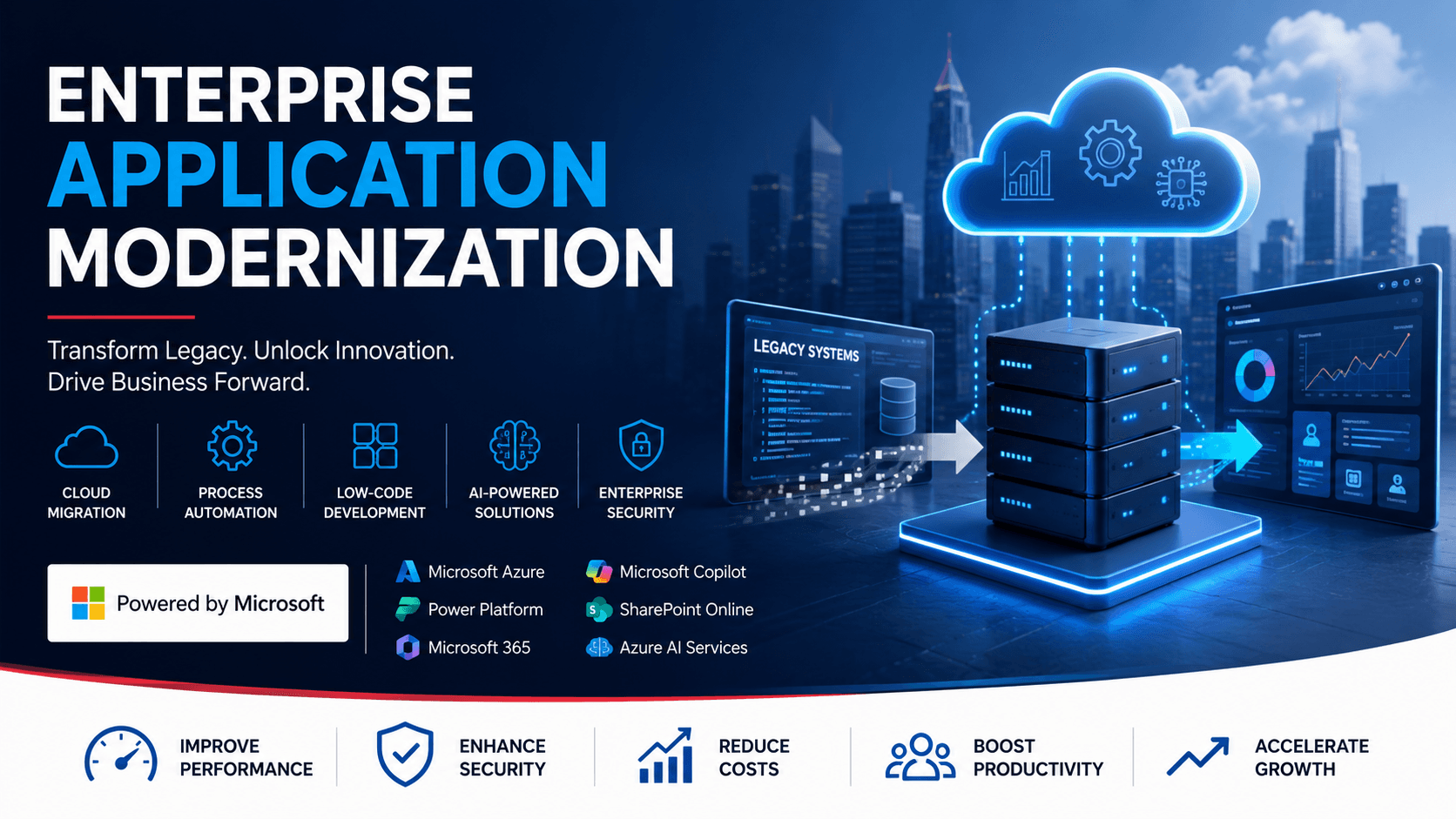
ENTERPRISE MODERNIZATION
ENTERPRISE APPLICATION MODERNIZATION
Introduction
Legacy enterprise applications often become barriers to business growth because they are difficult to maintain, expensive to scale, and unable to support modern technologies like cloud computing and AI. Enterprise Application Modernization helps organizations transform these outdated systems into secure, scalable, and intelligent business applications without disrupting critical operations.
- What Enterprise Application Modernization is
- Why organizations should modernize legacy applications
- How Microsoft's technology ecosystem supports modernization
- Best practices and common implementation mistakes
- Real-world business use cases and benefits
Quick Answer
Enterprise Application Modernization is the process of upgrading legacy applications using cloud platforms, automation, low-code development, and artificial intelligence. Instead of replacing business-critical systems, organizations enhance them to improve performance, security, scalability, and user experience.
Signs Your Legacy Application Needs Modernization
Many organizations continue to rely on applications that were built years ago because they still perform essential business functions. However, over time these systems become increasingly difficult and expensive to maintain. Recognizing the warning signs early helps businesses avoid operational risks and plan modernization before systems become a bottleneck.
Common indicators include:
- Slow application performance
- Frequent downtime or system failures
- High infrastructure and maintenance costs
- Limited integration with modern cloud services
- Poor mobile and remote accessibility
- Security vulnerabilities and compliance risks
- Difficulty finding developers for legacy technologies
- Lack of automation and manual business processes
If your organization experiences several of these challenges, it may be time to begin an application modernization initiative.
Enterprise Application Modernization Approaches
There is no one-size-fits-all modernization strategy. Organizations typically choose an approach based on business priorities, technical complexity, and budget.
Rehost (Lift and Shift)
Move applications to Microsoft Azure with minimal code changes to reduce infrastructure costs and improve scalability.
Refactor
Optimize application architecture and code for cloud-native performance while maintaining core business functionality.
Rearchitect
Redesign applications into microservices or container-based architectures to improve scalability, resilience, and agility.
Rebuild
Develop modern applications using Power Apps, .NET, React, and Azure services while preserving business workflows.
Replace
Replace outdated applications with Microsoft Dynamics 365, Microsoft 365, or other SaaS solutions when maintaining legacy software is no longer cost-effective.
Modernization commonly includes:
- Cloud migration with Microsoft Azure
- Workflow automation using Power Automate
- Low-code application development with Power Apps
- AI integration through Microsoft Copilot
- Enterprise security with Microsoft Entra ID
What is Enterprise Application Modernization?
Enterprise Application Modernization transforms traditional software into cloud-enabled, scalable, and intelligent business applications. The objective is to preserve existing business logic while improving usability, security, performance, and integration with modern Microsoft services.
Organizations typically modernize applications to:
- Improve application performance
- Reduce infrastructure costs
- Automate manual processes
- Enable mobile and web access
- Strengthen security and compliance
- Introduce AI-powered capabilities
Why Enterprise Application Modernization Matters
Modern businesses need applications that can adapt quickly to changing customer expectations and operational demands. Legacy systems often create bottlenecks that slow innovation and increase operational costs. Modernization enables organizations to remain competitive while preparing for future growth.
Business advantages include:
- Faster digital transformation
- Higher employee productivity
- Better customer experiences
- Reduced IT costs
- Stronger security
- Greater business agility
Common challenges solved:
- Aging infrastructure
- High maintenance costs
- Manual workflows
- Poor system performance
- Data silos
- Limited scalability
Conclusion
Enterprise Application Modernization is a strategic investment that helps organizations transform legacy systems into secure, scalable, and intelligent business applications. By adopting Microsoft technologies such as Azure, SharePoint Online, Power Platform, Microsoft Copilot, and Azure AI Services, businesses can improve operational efficiency, strengthen security, automate workflows, and accelerate digital transformation while protecting existing technology investments.
Whether you're modernizing a single application or planning an enterprise-wide transformation, a well-defined modernization strategy can help your organization innovate faster, reduce costs, and build future-ready digital experiences.
Softree Technology specializes in Enterprise Application Modernization using Microsoft's cloud and AI ecosystem. Our experts help organizations modernize legacy applications, automate business processes, implement AI-powered solutions, and build scalable enterprise platforms tailored to unique business requirements.
Learn more: www.softreetechnology.com